

Effective ED Treatment. Private. Convenient. Trusted.
Doctor-prescribed ED medication delivered discreetly to your door.
Physicians
Private
Delivery

ED3 Max Dissolvable ED Pills
Long-lasting results up to 36 hours.
- Up to 36 Hour Window
- Improved Confidence
- Works When You Need It

Sildenafil 25mg
Proven effective treatment.
- Starts Working in 30–60 Min
- Effective, As Needed
- Trusted & Reliable
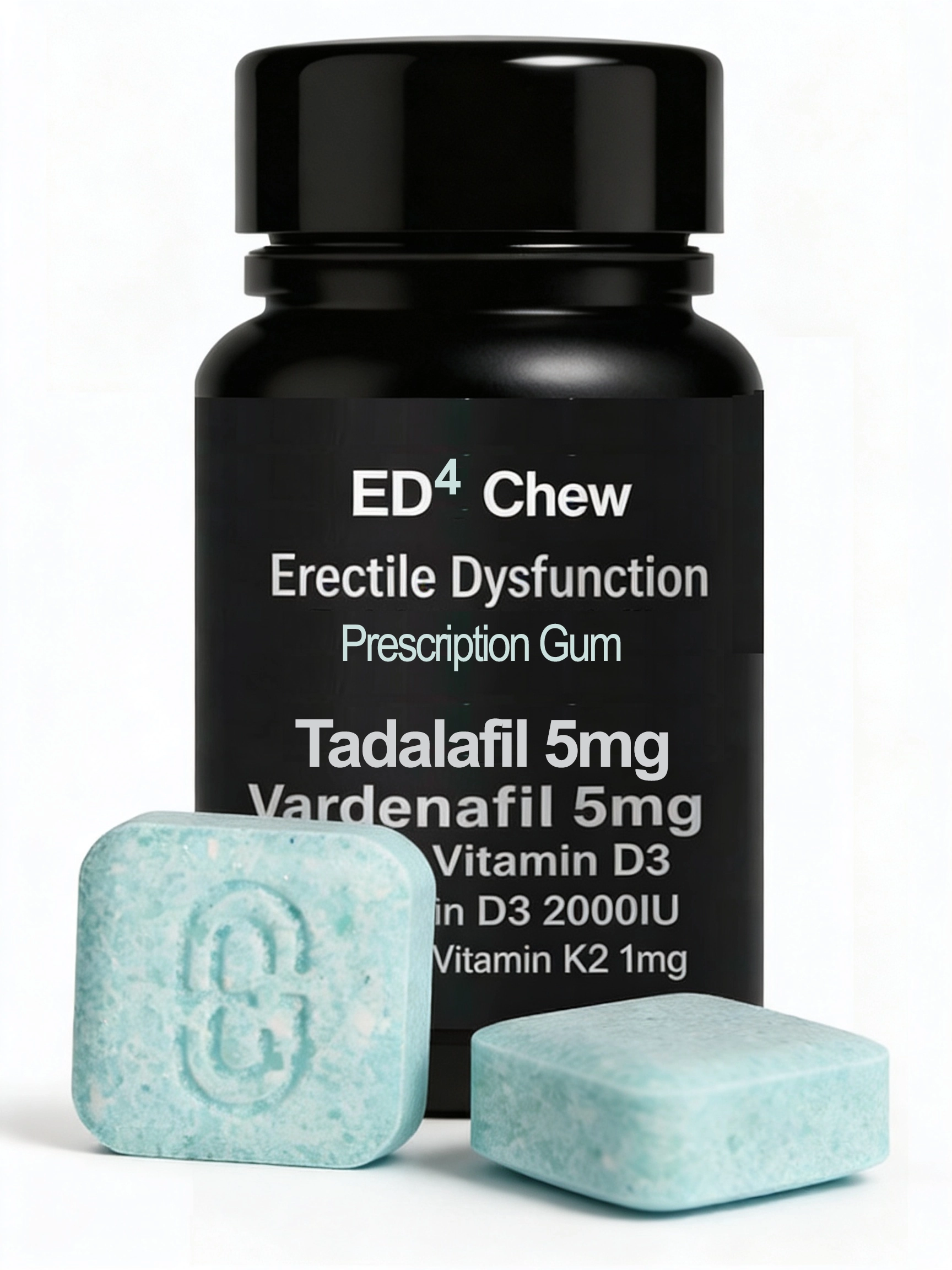
ED4 Chew Gum
Low daily dose for continuous readiness.
- Taken Once Daily
- Continuous Readiness
- Improves Confidence

It’s hard to imagine a more ideal vehicle for advertising an innovative drug designed to treat erectile dysfunction than the telecast of a National Football League game. After all, such commercials reach a huge audience that is predominantly male, along with a limited number of females who are so close to their male partners that they exhibit an interest — whether real or fake — in the pro football games to which their men are addicted.
And, in fact, until the beginning of the 2017-2018 NFL season, commercials for Viagra, as well as its biggest rival Cialis, were an integral part of the commercial sponsorship for NFL telecasts, which had expanded to three days a week. As the most recent pro football season kicked off on September 7, 2017, ads for Viagra, as well as those for Cialis, were conspicuously absent.
Ads Weren’t Kid-Friendly
Of course, parents of young children probably welcome the disappearance of these commercials, laden as they were with sexual innuendo so bald-faced even a child could grasp their real meaning. A scantily clad woman sprawled across a bed at some exotic tropical locale, visible through a set of open French doors, breathily extols the virtues of Viagra, which can enable a man to get and keep an erection even when it might be otherwise difficult to do so. In an article posted at Metro.us, writer Glen Macnow observed that “like every parent who ever watched with the kids,” he struggled through those commercial spots.
Weep not for the NFL, which should have no trouble finding other commercial spots to replace those withdrawn by Viagra and Cialis. After all, between them, spending for Viagra and Cialis commercials during NFL games totaled $53 million in the 2015-2016 season, according to FiercePharma.com. This is a proverbial drop in bucket when viewed against the total TV advertising revenues raked in by the pro football league. According to Forbes.com, the league’s TV ad revenues for 2015-2016 hit a record $3.5 billion. All the more astonishingly, these revenues set a record even though the ratings for TV broadcasts of NFL games were down.
The End of an Era
However, the disappearance of the Viagra and Cialis ads aired during NFL games does represent the end of an era, according to an article posted at AdAge.com. And, perhaps more significantly, it also coincides with the scheduled introduction in late 2017 of generic competition for Viagra, according to . While Eli Lilly and Company will hold onto its market exclusivity on Ciala at least until late September 2018, it also will face generic competition beginning then or shortly thereafter.
While some brand-name loyalists in a financial position to purchase genuine Viagra or Cialis will no doubt continue to do so, those with less money to spend will probably gravitate to the generic alternatives to save money. The advent — or imminent arrival — of this generic competition is clearly the biggest factor in the decisions by Pfizer and Lilly to sharply reduce their advertising budgets for Viagra and Cialis, respectively.
Viagra Was the First of Its Kind
When it was first introduced in 1998, Viagra was the first drug of its kind. It offered men suffering from erectile dysfunction a chance to at least temporarily regain normal erectile function and enjoy relatively normal sex lives. Five years later in 2003, Levitra and Cialis, both drugs in the same family of medications as Viagra, won approval by the Food and Drug Administration. These three drugs, all known as PDE5 inhibitors, were joined in 2010 by Staxyn and in 2012 by Stendra.
_600x.jpg)
Well into the 20th century, medical professionals widely believed that erectile dysfunction, or male impotence as it was more commonly known at that time, was caused primarily by psychological factors, including anxiety, depression, and stress. In more recent years, it’s been widely acknowledged that most ED stems from insufficient blood flow to the penis, precisely the physiological condition Viagra and the other PDE5 inhibitors are designed to treat.
Pfizer’s US Patent on Viagra Still Valid
Surprisingly, considering that Viagra was introduced a little more than five years before any of the other PDE5 inhibitors, Pfizer has managed to hold on to its U.S. patent on the drug for more than two decades. In other key markets around the world, including Canada, China, and the countries of the European Union, Pfizer’s patent on Viagra has long since expired. And in those countries, the brand-name drug faces still generic competition.
As early as 2010, Teva Pharmaceuticals, the Israeli-based pharmaceutical company that’s the world’s biggest generic drugmaker, announced its intention to market a generic alternative to Viagra in the United States. Pfizer went to court to block Teva’s planned generic launch. The litigation was in and out of court over the next few years, but in December 2013, the two companies announced that they had reached an agreement that would allow Teva to introduce a generic version of Viagra beginning on December 11, 2017.
Teva Will Pay Royalties to Pfizer
That same agreement recognized that Pfizer’s U.S. patent on Viagra would remain valid until April 2020. That means that Teva would be required to pay Pfizer loyalties for the privilege of marketing a generic Viagra until Pfizer’s patent finally expired. At about the same time, Pfizer struck a similar agreement with Mylan N.V., another of the world’s major generic drugmakers. Pfizer’s agreement will allow Mylan to bring its generic formulation of Viagra to the market, but as of this writing, no specific plans had been announced.
On December 11, 2017, Teva began marketing its generic formulation of Viagra, sold simply as sildenafil citrate, the active ingredient in the ED drug. At the same time, Pfizer introduced its own generic version of the drug, which is being manufactured by Greenstone LLC, a Pfizer subsidiary that specializes in generic drugs.
Lilly Holds Off Generic Competition
One of Lilly’s patents on Cialis expired in 2017, which had prompted a number of generic drugmakers to ready plans to introduce generic alternatives to that ED drug. The patent that expired in late 2017 covered the chemical formula for tadalafil, specifically as it is used in another Lilly drug known as Adcirca, prescribed for the treatment of pulmonary arterial hypertension. However, the chemical formulas for both Adcirca and Cialis are identical, which generic competitors believed would open the door for them to market alternatives to Cialis.
Lilly countered those arguments by pointing out that it also held a U.S. patent covering a unit dose for Cialis. That patent doesn’t expire until 2020. Lilly argued that any generic competition for Cialis would infringe on the unit dose patent.
Out-of-Court Settlement Reached
Not long before attorneys for Lilly and its would-be generic competitors were scheduled to face off in the U.S. District Court for the Eastern District of Virginia, all parties reached an out-of-court settlement. Under that agreement, Lilly’s market exclusivity on Cialis would be preserved until late September 2018 at the earliest.
Although Lilly has held off generic competition in the United States for a few more months, it won’t be long before it too will be battling with generic versions of Cialis for market share.
At least one U.S. patent on Levitra, which was actually the second PDE5 inhibitor to win approval by the FDA, expired in 2017. However, there has been no announcement yet of imminent generic competition for the drug.
Generics Will Push Prices Lower
The availability of generic alternatives to Viagra will certainly make the drug available at lower prices than have been charged until recently. However, because Teva must continue to pay Pfizer a royalty for the privilege of marketing its generic version of Viagra, prices may not drop as dramatically as might otherwise have been the case. Nevertheless, initial reports indicate that both Teva’s and Pfizer’s generic formulation are being sold at roughly half the price charged for brand-name Viagra.
Although there have been occasional rumblings about a plan to see Viagra or one of the other PDE5 inhibitors sold over the counter, current regulations require a prescription to purchase any of these drugs, whether brand name or generic. British regulatory authorities recently approved a Pfizer request to market Viagra over the counter, which should go into effect by the spring of 2018. If that goes well, it’s possible that the OTC availability of ED drugs may eventually spread to other markets, including the United States.
How to Order Viagra Online
If you would like to purchase Viagra, Cialis, or one of the other PDE5 inhibitors but would prefer to do so online, you might want to consider placing an order with eDrugstore.com, a reliable online supplier of select prescription and OTC drugs.
If you have a prescription from your doctor, you can fax it or scan and email it along with your order to eDrugstore. If, however, you don’t yet have a prescription and want to avoid the added cost of a doctor’s visit, eDrugstore can set up a complimentary online consultation with one of its team of licensed U.S. doctors. To learn more about erectile dysfunction and the medications available to treat it, click below to access eDrugstore’s Male Impotence page.

We specialize in providing our over 1,000,000 customers with relevant product and condition information created by our professional editorial staff which includes our team of medical writers, medical practitioners, and health educators. eDrugStore.com Staff on Facebook