


Effective ED Treatment. Private. Convenient. Trusted.
Doctor-prescribed ED medication delivered discreetly to your door.
Physicians
Private
Delivery

ED3 Max Dissolvable ED Pills
Long-lasting results up to 36 hours.
- Up to 36 Hour Window
- Improved Confidence
- Works When You Need It

Sildenafil 25mg
Proven effective treatment.
- Starts Working in 30–60 Min
- Effective, As Needed
- Trusted & Reliable
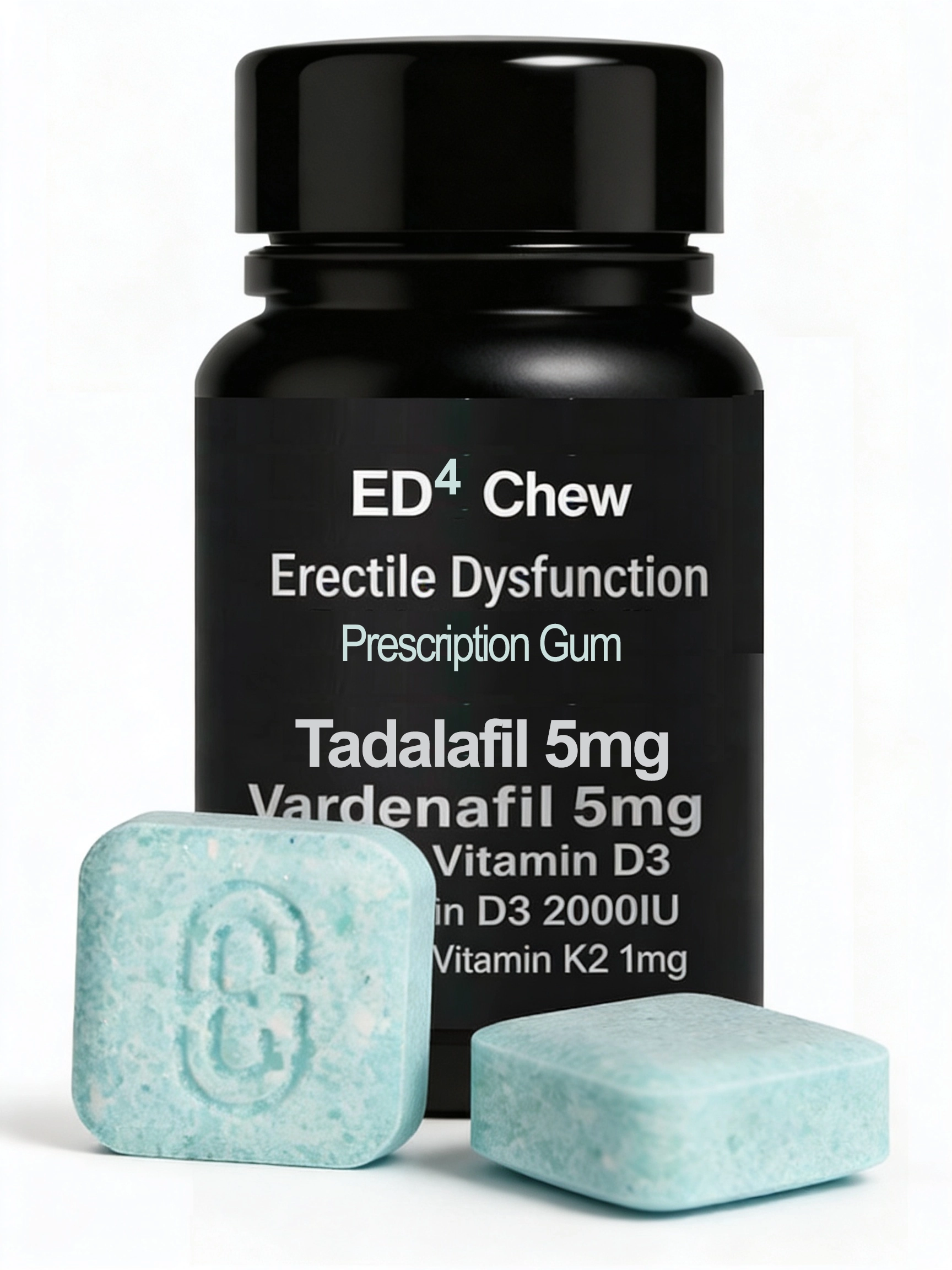
ED4 Chew Gum
Low daily dose for continuous readiness.
- Taken Once Daily
- Continuous Readiness
- Improves Confidence

In one of the latest studies to demonstrate the versatility of impotence drugs, researchers at South Florida’s Sylvester Comprehensive Cancer Center found that tadalafil, the active ingredient in Cialis, can be useful in treating certain cancers.
Specifically, the study concluded that patients with squamous cell carcinoma of the head and neck fared significantly better if they were treated with moderate doses of tadalafil before surgery.
Conducted in collaboration with Johns Hopkins University, the study found that tadalafil, administered prior to surgery, significantly reduced certain cells that impair the immune system’s ability to fight off these cancers. The Sylvester cancer center is part of the University of Miami Health System and coordinates all cancer-related activities of the university and its Miller School of Medicine.
Targets Immunosuppressant Cells
Rather than targeting the cancer cells, tadalafil helps to block the effects of myeloid-derived-suppressor-cells, or MDSCs, and regulatory T-cells, or Tregs, both of which suppress the body’s natural defense system against this type of cancer.
Under ideal circumstances, the body’s immune system mounts a vigorous attack on tumor cells when they are detected anywhere in the body. In the case of squamous cell carcinoma, the tumor cells recruit MDSCs and Tregs, which can blunt the force of the immune system’s response.
In laboratory tests conducted prior to their clinical study, researchers discovered that phosphodiesterase-5 inhibitors, such as tadalafil, suppressed the number of MDSCs and Tregs at the tumor site. The clinical study used tadalafil, which is just one of the PDE5 inhibitors that have been so successful in restoring erection function. Whether other PDE5 inhibitors would be similarly effective would require further testing.
Study Group Assembled
For their clinical study, researchers selected a number of patients who were scheduled for the surgical removal of squamous cell cancers of the mouth and throat. Study subjects were randomly divided into three groups, the first of which received 10 milligrams of tadalafil daily for 20 days prior to surgery. The second group got 20 milligrams of tadalafil daily, and patients in the third group got a placebo.
All study subjects were evaluated for blood and tumor levels of MDSCs and Tregs both before and after surgical removal of the tumors. Patients receiving tadalafil tolerated the drug well, according to researchers. The reduction in the number of MDSCs and Tregs was maximized at the moderate dose (10 milligrams daily) of tadalafil.

Prior studies had shown that high levels of MDSCs at tumor sites were associated with an increased likelihood of post-surgical recurrence of squamous cell cancers of the mouth and throat. Among patients of the study group, not only were their levels of MDSCs and Tregs sharply decreased, but tests also detected higher concentrations of tumor-specific CD8+T-cells, the immune system’s front line of defense against these specific cancers.
¨A New Therapeutic Strategy¨
In their conclusion to the study, published in a 2014 issue of ¨Clinical Cancer Research,¨ study leaders Paolo Serafini, Ph.D., and Donald T. Weed, M.D., said its results suggest that tadalafil could be ¨a new therapeutic strategy for these cancers.¨
Although Diana Lopez, Ph.D., professor of microbiology and immunology at the University of Miami, is credited with the discovery of MDSCs, Serafini has done extensive research on the immunosuppressive properties of these cells.
Neither Dr. Weed nor Serafini believes that tadalafil alone is a viable option for cancer therapy. However, they voice the hope that in combination with other immunotherapeutic treatments the drug could disarm the tumor’s ability to defend itself against the body’s immune system.
Follow-Up Study
To test out this theory, Dr. Weed and Serafini are embarking on yet another study in which tadalafil will be used with an experimental tumor vaccine to determine if the two drugs together promote an even more potent immune response.
This new study will be conducted at the Sylvester cancer center and will enroll patients suffering from stage 3 or 4 recurrence of squamous cell carcinoma of the head and neck who are scheduled for surgical removal of these tumors. For this study, they are collaborating with Olivera Finn, Ph.D., professor and chairman of the Department of Immunology at the University of Pittsburgh School of Medicine.
Finn is credited with developing the anti-MUC1 cancer vaccine, which is designed to bolster the body’s immune response against MUC1, an antigen found commonly on the surface of various cancers, including squamous cell carcinomas of the head and neck.
Combination Treatment
In this follow-up study, patients with advanced squamous cell carcinomas will be given a short course of tadalafil and the anti-MUC1 vaccine prior to surgery, followed by four courses of the drug combination after surgery. According to a press release from the University of Miami’s Miller School of Medicine, ¨the goal is to demonstrate that this therapeutic strategy can effectively prime the body’s immune response against these cancers and hopefully reduce recurrence rates among patients.¨

Participants in this second study are also hoping that this combination therapy — tadalafil and the anti-MUC1 vaccine — will condition the body in the future to recognize such cancer cells as foreign so that the immune system can attack them before they can develop into a clinically significant tumor growth.
Another participant in the earlier study at the Sylvester cancer center was Joseph Califano, M.D., director of head and neck cancer research at Johns Hopkins Medicine. In a 2009 interview with Scientific American, Dr. Califano said that one of the advantages of using Cialis as a cancer treatment was the fact that it had few side effects. ¨It’s very nice to have a drug that is basically very safe.¨
Bolsters Immune Response
In preliminary testing among head and neck cancer patients at Johns Hopkins, Dr. Califano and his colleagues found that treatment with tadalafil improved immune response significantly. In an interview with ABC7 News of Denver, he noted that tadalifil got ¨their immune response to rev up to near normal levels, whereas they were suppressed maybe 75 percent, sometimes even 80 percent.”
This use of tadalafil in treating head and neck cancers is just the latest in a string of findings that show PDE5 inhibitors, such as Cialis and Viagra, have a number of uses above and beyond the treatment of erection problems.
Also Treats Enlarged Prostate
In October 2011, the U.S. Food and Drug Administration approved low-dose Cialis for the treatment of benign prostatic hyperplasia, a noncancerous enlargement of the prostate gland common in older men.
Sildenafil citrate, the active ingredient in Viagra, is also available in a lower-dose drug marketed as Revatio and designed to treat pulmonary arterial hypertension, a form of high blood pressure that targets the lungs.
Recent studies indicate that sildenafil may also be helpful in treating the early stages of heart failure and could reduce low-weight newborns and stillbirths when used to treat pregnant women who have been diagnosed with intrauterine growth restriction, or IUGR.
Don Amerman is a freelance author who writes extensively about a wide array of nutrition and health-related topics.

We specialize in providing our over 1,000,000 customers with relevant product and condition information created by our professional editorial staff which includes our team of medical writers, medical practitioners, and health educators. eDrugStore.com Staff on Facebook