


Effective ED Treatment. Private. Convenient. Trusted.
Doctor-prescribed ED medication delivered discreetly to your door.
Physicians
Private
Delivery

ED3 Max Dissolvable ED Pills
Long-lasting results up to 36 hours.
- Up to 36 Hour Window
- Improved Confidence
- Works When You Need It

Sildenafil 25mg
Proven effective treatment.
- Starts Working in 30–60 Min
- Effective, As Needed
- Trusted & Reliable
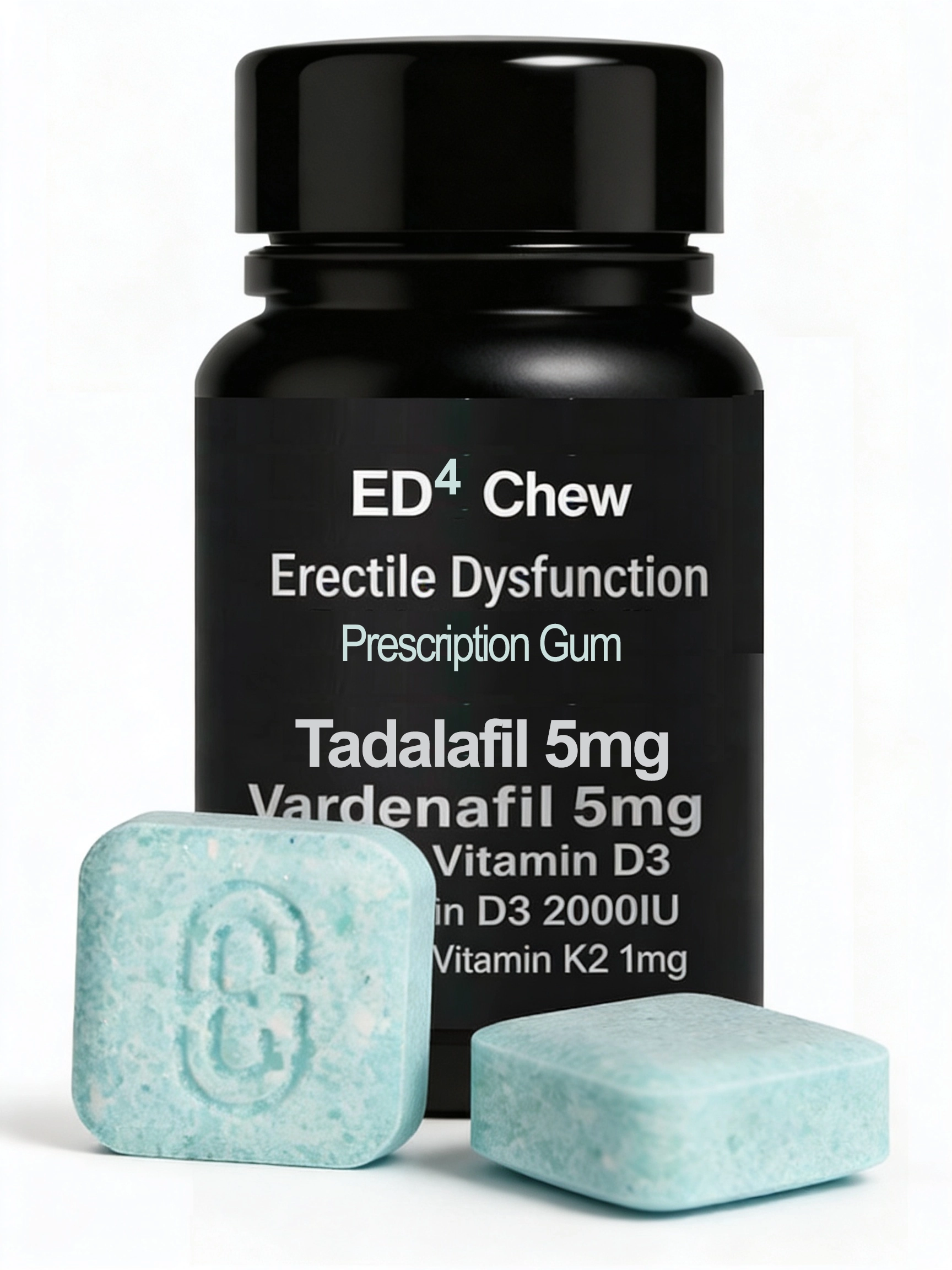
ED4 Chew Gum
Low daily dose for continuous readiness.
- Taken Once Daily
- Continuous Readiness
- Improves Confidence

Preliminary studies indicate that tadalafil, the active ingredient in Cialis, America’s second-biggest selling impotence drug in 2013, may be helpful in treating certain types of cancer.
Researchers at Miami’s Sylvester Comprehensive Cancer Center, in collaboration with researchers from Johns Hopkins University, looked specifically at tadalafil’s ability to manipulate the body’s immune system to halt the growth of cancers of squamous cells.
What Are Squamous Cells?
Squamous cells make up most of the cells in the epidermis, the outermost layer of our skin, and also appear in the epithelial lining of delicate oral, esophageal, and rectal tissues.
Researchers studied the drug’s effects in patients with squamous cell cancers of the mouth and throat, cancers that are potentially deadly and have a relatively high rate of recurrence when compared with some other cancers.
Their findings show that tadalafil may hold promise as one of several therapies to be used in treating these cancers. Squamous cell cancers have an insidious way of proliferating in healthy tissue by getting protection from the immune system’s own regulatory T-cells and myeloid-derived-suppressor-cells, or MDSCs.
Complexities of Immune System
Your body’s immune system is very complex and involves a wide array of players. While certain T-cells, generally known as helper T-cells, are dispatched to fight off substances believed harmful to the body, regulatory T-cells are designed to keep the helper T-cells from overdoing it.
Together with MDSCs, regulatory T-cells help to prevent excesses on the part of your body’s immune system, excesses that might express themselves as auto-immune disorders. In the case of squamous cell cancers, for reasons not fully understood these MDSCs and regulatory T-cells interfere with the immune system’s attempts to isolate and eventually eliminate malignant cells.
Fighting Immunosuppressant Cells
The study conducted by Sylvester and Johns Hopkins researchers focused on finding a way to reduce the effects of these immune-suppressing cells in patients who had been scheduled for surgery to remove malignant tissue. Specifically, researchers were looking for ways to deactivate these interfering immune system cells in such a way that patients were less likely to experience a recurrence of these cancers in the months and years after surgery.

Laboratory studies that were undertaken in advance of their clinical study demonstrated to researchers that PDE5 inhibitors — the class of drugs to which tadalafil belongs — could help to bring MDSCs and regulatory T-cells under control.
The clinical study was designed to determine if the same phenomena observed in test tubes could be duplicated in humans with squamous cell cancers.
Study Group Assembled
Researchers assembled a study group of patients who had been scheduled for surgical removal of squamous cell tumors of the mouth and throat. They divided their study subjects randomly into three separate groups. The first got a daily dose of 10 milligrams of tadalafil in the 20 days leading up to surgery. The second group got 20 milligrams of tadalafil daily, and the third group was given a placebo.
All patients in the study group were evaluated for the presence of MDSCs and regulatory T-cells in their blood and tumors in the period leading up to surgery and then again over the 20 days following the surgical removal of their tumors. Those treated with tadalafil showed significantly lower levels of these cells in both blood and tumors before the surgery and in their blood after the tumors had been removed.
10-Milligram Dose Optimal
Researchers said that the optimal effect had been achieved at the 10-milligram dosing level with no discernible improvement noted among those given the higher dose.
Perhaps most significantly, postsurgical testing of patients who had been given tadalafil showed higher blood levels of CD8+ t-cells, which are known to have strong cytotoxic properties and are also capable of fighting the spread of malignant cells.
An abstract previewing the researchers’ study and findings was published online in mid-October 2014 by ¨Clinical Cancer Research.¨ In their conclusion, researchers say that the study’s results provide convincing evidence that tadalafil beneficially modulates the body’s immune response making it easier to effectively treat squamous cell cancers of the mouth and throat.
Other Medical Applications
While tadalafil is likely to remain best known as the active ingredient in Cialis, which racked up 2013 sales of more than $1 billion, according to Drugs.com, the drug has been shown to have potential for a number of other medical applications. This compared with Viagra sales of close to $1.2 billion in 2013, based on data from Drugs.com.

As previously noted, both Cialis and Viagra belong to a family of drugs known collectively as PDE5 inhibitors. They get their name from their ability to temporarily deactivate an enzyme known as phosphodiesterase-5. One of the primary jobs of the PDE5 enzyme is to break down a substance known as cyclic guanosine monophosphate, or cGMP. The role of cGMP is to relax the smooth muscles lining blood vessels so that the vessels can expand and carry a greater amount of blood. Strong blood flow to the penis is essential in order to achieve and maintain an erection strong enough for intercourse.
Tadalafil’s ability to promote optimal blood flow by disabling the PDE5 enzyme also figures into its approval as a treatment for pulmonary arterial hypertension, or PAH, a form of high blood pressure that targets the lungs.
Fights PAH as Adcirca
Marketed as Adcirca, 20-milligram tadalafil tablets are taken twice daily by PAH patients to open up the blood vessels supplying the lungs and thus normalize blood pressure levels within the body’s lower respiratory system. Optimizing blood pressure levels in the lungs allows them to function more effectively.
Sildenafil citrate, the active ingredient in Viagra, the first of the PDE5 inhibitors to come to market in the late 1990s, is also sold under the brand name of Revatio as a treatment for PAH.
Also Treats Enlarged Prostate
Yet another medical application for tadalafil is as a treatment for benign prostatic hyperplasia, or BPH, a noncancerous enlargement of the prostate gland. BPH is widely seen in older men, and although it is not cancerous, it can cause a number of troublesome symptoms, including a weak urine stream, difficulty in starting urination, and frequent urination at night.
Because many men with BPH also experience erection problems, the U.S. Food and Drug Administration in October 2011 approved use of Cialis to treat both BPH and impotence in men who are experiencing symptoms of both disorders concurrently.
In the clinical studies of tadalafil’s efficacy as a treatment for erection problems, researchers found that the drug was generally safe and effective for most men. However, men with heart disease should check first with their doctors to see if they are healthy enough to participate in sexual activity.
Because tadalafil — and all of the other PDE5 inhibitors — work by lowering blood pressure, none of them should be taken at the same time as nitrate-based drugs that also significantly lower blood pressure. Taken together, they could cause a life-threatening drop in blood pressure.
Don Amerman is a freelance author who writes extensively about a wide array of nutrition and health-related topics.

We specialize in providing our over 1,000,000 customers with relevant product and condition information created by our professional editorial staff which includes our team of medical writers, medical practitioners, and health educators. eDrugStore.com Staff on Facebook