

_600x.jpg)
Mosquito season is upon us, and it’s just a matter of time before the first case of the Zika virus actually contracted in the United States through a mosquito bite is reported. However, it’s already known that the virus also can be spread through unprotected vaginal intercourse, and experts now are advising that it probably can spread through both oral and anal sex as well.
In a letter to the editor in the June 2, 2016, issue of “The New England Journal of Medicine,” a number of French doctors reported on a case of the virus in a Paris woman who had not traveled to a region where the virus is epidemic and who had not recently received a blood transfusion.
Sexual Contact Blamed
After eliminating other likely means of transmission, the doctors pinpointed the woman’s sexual contact with a man who had recently spent two months in Brazil. While there, he suffered symptoms of the virus, including fever, fatigue, skin rash, and muscle pain, that began on February 6, 2016. His symptoms resolved on the day he returned to France — February 10, 2016.
However, upon closer questioning of the woman, doctors learned that between February 11 and 20 the woman had unprotected vaginal intercourse on seven occasions with the man who’d traveled to Brazil. However, in none of those episodes did the man ejaculate. The only direct contact she had with the man’s semen was as a result of oral sex, in which case he did ejaculate.
Woman Experiences Symptoms
Beginning on February 20, 2016, the woman began experiencing classic systems of the Zika virus, including fever, joint and muscle pain, and an itchy rash. During a clinical examination on February 23, the woman presented with a maculopapular rash on her abdomen, arms, and legs and a normal temperature. After a period of seven days, all of the woman’s symptoms had disappeared.
Clinical testing of the man who’d visited Brazil included a urinalysis that was positive for the virus on February 23, as well as blood and saliva samples that were negative for the virus. Semen samples obtained from the man on February 25 tested positive for the virus with a high viral load.

The French doctors’ clinical findings support their theory that the virus was transmitted sexually, either vaginally or orally. They lean toward the belief that it was transmitted through oral sex, although they acknowledge that it was possible that it could have been spread through the woman’s contact with the man’s pre-ejaculatory secretions or through saliva. They point out, however, that thus far there have been no reported cases of the virus being spread through saliva.
In the absence of conclusive evidence of just how the virus was spread from the man to the women, the doctors strongly recommend that condoms be used in any sexual contact with individuals who may have been exposed to the virus during travel or through sex.
Many Have No Symptoms
Although both individuals in the French case experienced symptoms of the Zika virus, others may become infected with the virus yet never realize it because they have no symptoms at all. Zika’s symptoms, if they should appear, are similar to those reported in the French couple. The virus’s most common symptoms, according to the Centers for Disease Control and Prevention, include fever, joint pain, rash, and conjunctivitis. Other common symptoms are headache and muscle pain. If they occur at all, these symptoms usually appear within a few days to a week after an individual becomes infected.
Zika’s symptoms are generally mild and short-lived, says the CDC. Zika rarely requires hospitalization, and few people have died of the virus. However, its consequences for women who are pregnant can be devastating. In Brazil, where Zika is epidemic in scale, a number of infected pregnant women have delivered babies suffering from microcephaly. This is a birth defect in which babies have heads smaller than normal as well as small brains that appear not to have fully developed.
Other Problems Possible
Although microcephaly is the most widely seen birth defect linked to Zika, other problems have been detected in fetuses and newborns who were infected with the virus during gestation. These include eye defects, impaired development, and hearing loss. Because Zika is a relatively new health problem, it has not been fully studied, and further research may yet uncover additional problems linked to the virus.
Again, because Zika and its effects in humans are not yet fully understood, CDC acknowledges that there is much about the virus that is as yet unknown. For example, the agency says it cannot yet say whether men who’ve been infected with the virus but have not experienced symptoms have the virus in their semen or can somehow transmit the virus sexually through some other bodily fluid. Also unknown is whether a woman infected with the virus can pass it to a male partner through sexual contact.

Because of these unknowns, the CDC suggests that pregnant couples with male partners who travel to areas where Zika is widespread take the following precautions:
- Use a condom every time they have any form of sexual contact. To effectively protect against the spread of Zika and other sexually transmissible infections, condoms must be used correctly from start to finish. Follow CDC’s tips on proper condom use.
- Take steps to avoid mosquito bites when in areas known to harbor infected mosquitos. Wearing long-sleeve shirts and full-length pants cuts down on skin areas vulnerable to mosquito bites. Use insect repellents with effective ingredients such as DEET, Picaridin (KBR 3023), oil of lemon eucalyptus or para-menthane-diol, and IR3535.
- Travelers returning to the United States from areas where Zika is widespread should take extreme care to avoid mosquito bites for the first three weeks after their return to prevent passing the virus to uninfected mosquitos.
No US-Infected Mosquitos Yet
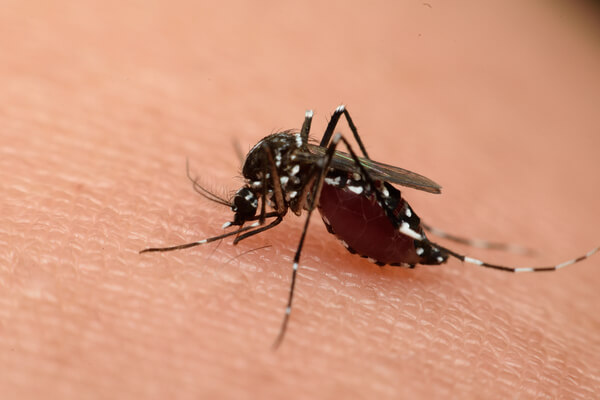
As of this writing, there has yet to be a case of the Zika virus transmitted by mosquito bite within the continental United States. However, according to a recent story in The New York Times, health officials expect it to happen as warm weather spreads throughout the country. The mosquito responsible for the transmission of the Zika virus is the Aedes aegyptii species, also known as the yellow fever mosquito. These mosquitos are present in the American South and Southwest and can spread beyond those areas in hot weather. This species of mosquito has been known to spread dengue fever and the chikungunya virus.
Government authorities in mosquito-prone areas of the country have stepped up their mosquito control efforts in an attempt to stave off as long as possible the mosquito-borne Zika virus in this country. Nevertheless, it is probably only a matter of time before the virus spreads to mosquitos here. It’s probably safer to act as though the virus were already present and take all necessary steps to avoid mosquito bites.
If you’d like to read more about sexual health and function as well as other topics of interest to health consumers, check out our blog.

We specialize in providing our over 1,000,000 customers with relevant product and condition information created by our professional editorial staff which includes our team of medical writers, medical practitioners, and health educators. eDrugStore.com Staff on Facebook