

 There’s Celebrex and Celexa. There’s Azacidine and Azathioprine. There’s Invanz and Avinza.
Similar drug names are partially to blame for the five million annual mistakes that cause Americans to receive a different medication than the one they were actually prescribed. Most of these patients live to talk about it. Many do not.
It has been about 10 years since the Institute of Medicine reported that 7,000 people in the U.S. die from medication errors each year. Since then, hundreds of new medications have hit the U.S. market, further straining the ability of humans to communicate effectively and ultimately deliver the correct product.
According to a 2008 report by U.S. Pharmacopeia, there are more than 1,500 drugs that have names so similar it caused them to be confused with another medication. See this report by the Institute for Safe Medical Practices to see some of these names.
To the average bystander, it appears that the FDA (which approves all drug names) is either not screening the names closely enough, or running out of options.
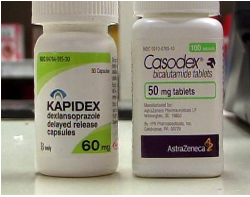
Take, for example, the April, 2010 announcement by Takeda, which agreed to change the name of its new heartburn drug Kapidex due to reported confusion with the prostate cancer drug Casodex. These two drugs couldn’t sound much more similar – or treat conditions that could be much more different.
According to Wolters Kluwer Pharma Solutions, U.S. outpatient pharmacies filled 3.9 billion prescriptions in 2009. Of those, 325,000 were serious enough to cause potential harm to patients due to the fact they were filled incorrectly with the wrong drug.
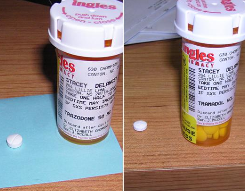 Pharmacopeia reports that any number of individuals from the prescribing doctor to pharmacy tech may be to blame for any single wrong-drug event. The organization stated that pharmacy technicians are implicated in 38 percent of wrong-drug events, pharmacists in 24 percent of events, registered nurses in 20 percent of events and doctors in 7 percent.
In order to reduce these events, the FDA and many organizations stand behind a technique called “Tall Man Lettering,” which means certain letters are capitalized for drugs that have similar names. For instance, “predniSONE” and “prednisoLONE” would be used for these two drug names.
When it’s all said and done, however, there is no full-proof way to prevent all wrong-drug events. Although the weight of this wrong-drug phenomenon does not rest on the patient’s shoulders, there are things that consumers can do to help prevent injury or death in the instance of receiving the wrong medication (most of which involve identifying the wrong medication before taking it):
1. Write down the names of all drugs you take and what they are for; write down both the brand name and the generic name.
2. Confirm the spelling of the drug on the front of your medication bottle when you receive it.
3. Don’t rely solely on appearance (pills vary by manufacturer), but if you notice a difference, address it with your pharmacist and/or doctor.
4. Pay attention to how you feel after each refill. If you have new symptoms or feel differently, talk to your doctor.
5. Take medications only as prescribed, and do not leave old medications laying around.
Sources for this article included MSNBC.

We specialize in providing our over 1,000,000 customers with relevant product and condition information created by our professional editorial staff which includes our team of medical writers, medical practitioners, and health educators. eDrugStore.com Staff on Facebook