

-
A new species of monkey was recently discovered in the Democratic Republic of Congo — the Lesula. — Click to Tweet
The researchers, a U.S. team led by John Hart, have published their findings in the journal Plos One after three years of working with geneticists and anthropologists to confirm their work.
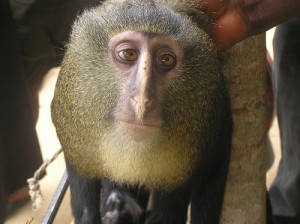
Known as the Lesula by locals, scientists have named the monkey Cercopithecus Lomamiensis. The monkey was first discovered tethered to a post near a school. It had been taken as a pet by a local schoolteacher’s daughter.
Right away John Hart could tell there was something different. The Lesula looked like an owl faced monkey (Cercopithecus Hamlyni), which usually lives much farther east in Asia. But as John Hart said, the coloring was very different.
One Very Distinctive Feature… A Blue Butt
The monkey’s most distinct feature is its brightly-colored blue rear end. In fact, the researchers wrote that “the blue perineum, buttocks and scrotum displayed by adult males are more extensive than genital patches in any other Cercopithecus.”
The Lomami forest basin is a uniquely isolated forest area, a 6,500 square mile area that has had very little attention from biologists. In this remote area, the lesula — which is known for being shy — has been able to avoid detection by modern scientists up until its discovery in 2007.
Still, John Hart says he didn’t expect to find any entirely new species there. Even in the most remote areas, such finds are increasingly rare. The last confirmed discovery of a new monkey species was 28 years ago.
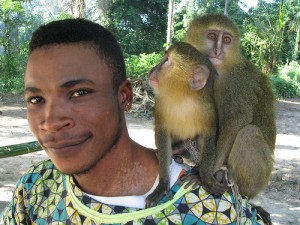
- Lesula’s are sometimes kept as pets by locals, but they’re also under threat by poachers. (Picture by teresehart on Flickr.)
 Where The Monkey LivesThe Monkey’s Endangerment
Since John Hart discovered the monkey, he’s been working hard to ensure that the species remains safe.
The lesula’s natural habitat is a small one, and the limited range of the monkey puts it at even greater danger from poaching than it normally would be. When hunters attack, there simply aren’t as many monkeys left to recover from the killings as there are with other species.
Because the range is so small, a species like the lesula can “move from vulnerable to seriously endangered over the course of just a few years.” John Hart is working with Congolese authorities to establish a national park in the region to protect the lesula and all other local fauna.
In fact, his mission goes even farther than that. Now that he’s made his discovery, his next challenge “is to make the Lesula an iconic species that carries the message for conservation.”

We specialize in providing our over 1,000,000 customers with relevant product and condition information created by our professional editorial staff which includes our team of medical writers, medical practitioners, and health educators. eDrugStore.com Staff on Facebook