
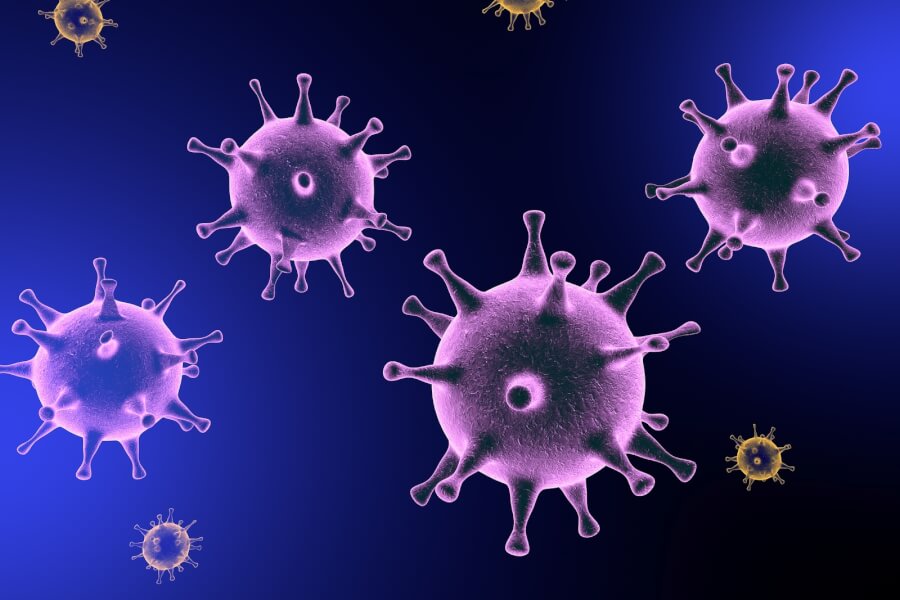

Preliminary research raises hopes that nanoparticle technology could someday help develop a vaccine effective against genital herpes. At present, this viral infection has no cure, although certain medications can reduce the number and severity of its outbreaks.
An infective agent known as herpes simplex virus-2, or HSV-2, is responsible for most cases of recurrent genital herpes.
Roughly 50 million Americans are infected with HSV-2, but an increasing percentage of people with herpes infections in the genital region are actually infected with a similar virus called HSV-1, which is usually responsible for cold sores around the mouth. Genital herpes infections with HSV-1 are more common among young women than other demographic groups.
Infection with HSV is lifelong and is typically acquired through physical contact. The virus usually enters the body through the epithelial cells of the mouth and genitals. The viral “envelope” fuses with the target cell’s plasma membrane to gain entry to bodily cells, and when the virus enters host cells, it can multiply very rapidly.
Preventing the Virus’s Spread
There are several challenges to preventing the spread of genital herpes, including the fact that up to 90 percent of people who have it don’t know they have it. Around three-quarters of a million new cases of genital herpes are diagnosed each year, and by some estimates, up to 40 percent of all men and half of all women in the United States could be infected.
While HSV-2 itself is a manageable illness, the lesions caused by it increase a person’s risk for acquiring HIV. In fact, your chances of contracting HIV are three to four times higher if you have physical contact with someone who has active genital herpes lesions than if you don’t. This is one of the main reasons why preventing herpes infection is a high priority.
Why Vaccines Don’t Work

You may wonder why if a vaccine for chickenpox has been around for several years, there’s still no vaccine against HSV-2. There are several reasons. Chickenpox is caused by a herpes virus called varicella-zoster that is similar to HSV but has important differences. To make the chicken pox vaccine, natural varicella virus cells commonly found in the back of the throat are grown in special cells called fibroblast cells. This renders them less able to grow in human cells because genes “telling” the varicella how to reproduce are changed. The result is a vaccine that reproduces modified varicella only a dozen or so times, which is not enough to cause illness, but is enough to cause the body to develop immunity.
The problem with developing a vaccine for HSV-2 is mostly to do with the virus’s ability to evade the immune system’s protective mechanisms. The failure of many HSV vaccine candidates has nonetheless improved scientists’ understanding that cellular immunity is necessary for true protection and to prevent transmission of HSV to uninfected partners.
Prophylactic Vaccines
Prophylactic vaccines against HSV are designed to prevent infection in people who are seronegative (negative blood test) for the virus. But past attempts have been unable to prevent viral latency, even if the vaccines were able to prevent disease symptoms when vaccinated mice were infected. Therapeutic vaccines, designed for people who have already been exposed to HSV have not been successful in reducing HSV symptoms or in preventing viral shedding (and hence, transmission). But scientists in Chicago and Germany are working on an entirely new way to provide cellular immunity to HSV, and so far it looks promising.
In order for HSV to infect bodily tissues, the virus’s envelope must fuse with the plasma membrane of the cell it’s trying to infect. But what if you could prevent this from happening? Researchers from the University of Illinois at Chicago and Kiel University in Germany have developed specially shaped zinc oxide nanoparticles that are able to trap HSV so it can’t enter cells. Their work was recently published in The Journal of Immunology.
Tetrapod-Shaped Nanoparticles
The nanoparticles are “tetrapod” shaped, meaning they have four “legs” projecting out from a center, and look similar to the jacks that kids play with (which actually have six “legs,” but are similarly shaped). The nanoparticles have been named “microbivacs” because they have properties both of microbicides and of vaccines.
The special nanoparticles, which the researchers named “ZOTEN,” are negatively charged on the surface. The HSV-2 virus has positively charged proteins on its outer covering, so it’s attracted to the ZOTEN. Once the HSV-2 viruses are stuck to the ZOTEN, they can’t infect cells. Even better, these viruses are still detectable to other immune cells that create antibodies. Not only can the trapped viruses not enter cells, they are then crippled by antibodies and trigger creation of custom “killer cells” that destroy the viruses before they take over and spread.
In female mice whose vaginas were swabbed with an ointment containing ZOTEN before being exposed to HSV-2, fewer genital lesions appeared than in mice swabbed with placebo ointment. Furthermore, the ZOTEN-treated mice had less central nervous system inflammation, which is significant, since HSV-2 likes to hide out in the central nervous system.
What Scientists Hope For
Since the results of the ZOTEN cream in mice were so encouraging, scientists now hope to be able to develop a topically applied vaginal cream for humans that offers both immediate protection against herpes virus infection as well as longer term protection due to stimulation of immunity. Such a cream would be applied just prior to sexual activity, but if the occasional dose were skipped, the immunity developed from prior applications might still offer some protection. Not only would transmission of HSV-2 be reduced, the risk of acquiring HIV could go down if rates of HSV-2 in the general population fell.

Similar nanoparticles could be developed to work against other viruses, including HIV, which also contains positively-charged proteins. New nanoparticles could be designed with specific viruses in mind and could be deployed to break down and disarm them. So far, studies have only been done in mice and insects, but results demonstrate that these nanoparticles can eliminate 97 percent of viruses in culture. If viral eradication can be pushed to beyond 99.9 percent, it would represent a major medical breakthrough.
For example, nanoparticles could be developed for newly emerging flu and other viruses, including bioterrorist-produced ones. What’s more, the nanoparticles could be used to treat people already suffering from viruses, ushering in a new type of antiviral therapy. Clinical trials in humans are likely in the next couple of years, when researchers will attempt to learn things like whether they work best when inhaled, injected, applied topically, or swallowed.
Current Options for Treating Herpes
Meanwhile, people who have genital herpes have options for controlling the virus and lessening its impact. Current antiviral drugs help people remain symptom-free longer and can prevent outbreaks when taken at the very first signs of an outbreak. These drugs don’t cure HSV, but they can make living with it significantly easier. The drugs acyclovir, famciclovir, and valacyclovir are antivirals that are taken in pill form to control genital herpes outbreaks. People who have frequent recurrences can even take the drugs as a preventative step.
Typically, when a person is first diagnosed with genital herpes, he or she takes a course of antiviral therapy to minimize the symptoms, because a first outbreak is usually the most painful. Subsequent outbreaks may be treated intermittently, which means a person keeps an antiviral drug on hand in case of a flare-up, or suppressively, where a person takes an antiviral drug every day to reduce the number of outbreaks (often by 70 to 80 percent or more).
A diagnosis of HSV may feel devastating, but it doesn’t have to limit a person’s life goals, including goals like getting married, having a family, or having an enjoyable sex life. With current antiviral therapy and excellent self-care, the impact of HSV can be minimized. And if nanoparticle treatments are developed for humans, suffering due to HSV (and possibly HIV as well) could be reduced further.
Longtime online facilitator eDrugstore.com is committed to helping its customers enjoy excellent health, including excellent sexual health. We invite you to read and learn more about sexual health and your options for ensuring you have a safe, enjoyable sex life.

We specialize in providing our over 1,000,000 customers with relevant product and condition information created by our professional editorial staff which includes our team of medical writers, medical practitioners, and health educators. eDrugStore.com Staff on Facebook