

French beekeeper hives are producing colored batches of honey — red, blue, and green, the color of M&Ms processed at a nearby plant. — Click to Tweet.
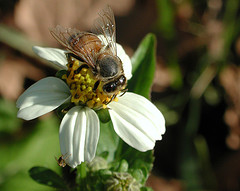
The honey was confusing at first, until beekeepers realized it was being contaminated by bees that were collecting residue from M&M’s that were being processed at a nearby biogas plant in northeastern France. The beekeepers found out after searching for a possible cause and realized the processing plant was over 2.5 miles away.
The reason each hive remained the same color, rather than mixing the colors together, is that bees naturally targeted the “flowers” of one variety until they’re all gone, which gives the highest chance of pollination. High rates of pollination are mutually beneficial for both the bees and the flowers, so such behavior is encouraged by evolution.
How Do M&Ms Lead to Colored Honey?
The honey bees naturally seek out sources of nectar, which they bring back to their nest. Ordinarily a bee accomplishes this by rubbings its legs in the nectar, which transfer to a “special storage stomach.” Once they return to the hive, they complete a “tongue-to-tongue” transfer to honey bees, which process the nectar in their honey stomachs.
After this process is complete, the honey bees deposit the mixture of processed sugars into a honeycomb, where it dries out, leaving behind the thick, sticky substance we know as honey.
But because all of the sugars they’re picking up from the plant are contaminated with dyes, the dyes make it all the way back to the honeycombs, surviving the entire process in between.

M&M’s Reaction
The Mars candy company has declined to make any official comment, but the processing facility has since cleaned its containers and started storing its waste in a “covered hall.”
Protective measures like this are absolute minimums for ensuring the continued safety of bee populations. There’s been a dramatic decline in hive population numbers over the last decade or so, with much it caused by continued contamination from pesticides and herbicides used by farmers.
The threat to France’s economy is especially pronounced, as they’re one of the largest producers of honey in the entire European Union.

We specialize in providing our over 1,000,000 customers with relevant product and condition information created by our professional editorial staff which includes our team of medical writers, medical practitioners, and health educators. eDrugStore.com Staff on Facebook