

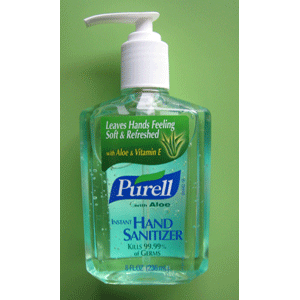
 America loves hand sanitizers. Brands like Purell are on track to sell $402 million by 2015. But there’s a lot of compelling evidence that hand sanitizers don’t really do much to prevent the flu or other illnesses. They may make you feel better, but all you’re getting is the placebo effect…and dry hands.
Hand sanitizers use alcohol in a gel form to kill microbes, and they do, in fact, kill germs in the lab, and easily. Study after study , however, has found that hand sanitizers don’t affect the percentage of respiratory infections like the flu or colds in households or schools. Even when you include other anti-bacterial products, there’s no effect whatsoever, although one study did find a slight decrease in much rarer gastrointestinal illnesses.
The problem is that once you clean your hands, they just get dirty all over again a second later when you touch something. The average adult touches anything from ten to thirty objects a minute, all of which carry germs, and immediately put all the germs you just killed right back on your skin, ready to make you or someone else sick. Kids are even worse: you can sanitize their hands all you want, but they’re just going to touch their nose and bring those germs right back. Children touch their noses up to three times a minute. You’d have to do nothing but sanitize your hands to have any real effect.
Even if hand sanitizers kept your hands germ-free, it’s still a moot point: not all germs are spread by contact with a surface carrying them. The flu, for example, spreads through people sneezing. Unless you’re constantly washing the air, hand sanitizers offer no protection against airborne diseases. If you’re genuinely concerned about getting sick, don’t reach for the hand sanitizer, do the following:
– Practice proper cleanliness. Wash your hands before and after handling food or caring for somebody who is sick, and clean up any spills or messes immediately. Washing your hands and cleaning up after yourself has actually been proven by science to reduce illness by a large degree.
– If you sneeze, cover your nose and mouth so droplets don’t get in the air and infect others. Common courtesy is the best preventative medicine, for yourself and others.
– If you do get the flu, don’t make yourself go out unless you absolutely have to. Limit your ability to spread the infection to others.
 – With the flu, mix modern medicine with classic comforts: get bed rest, drink plenty of fluids, and consider getting a prescription for a drug that reduces your symptoms and sick time, such as Tamiflu. The shorter your time being ill, the less infectious you are to other people.
– And, most importantly, if you become seriously sick, go see your doctor. Your doctor knows better than anyone how to get you back up to speed. Listen to the advice offered and do what the doctor orders.
Do all of that, and you’ll be much better off, and free of the flu.

We specialize in providing our over 1,000,000 customers with relevant product and condition information created by our professional editorial staff which includes our team of medical writers, medical practitioners, and health educators. eDrugStore.com Staff on Facebook