

 By Paul Briand
Baby Boomers know a fair amount about the ailments that affect their vision. But a recent study shows they don’t know much about age-related macular degeneration, which just happens to rank as the No. 1 illness that affects the vision of older Americans.
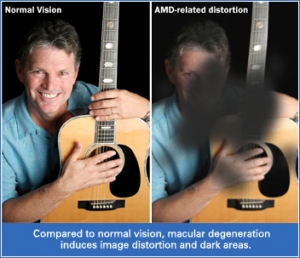
AMD occurs when the macula – the central portion of the retina that is important for reading and color vision – becomes damaged. There are two forms of AMD – wet and dry. All cases begin as the dry form, but 10 to 15 percent progress to the more serious wet form, which can result in sudden and severe central vision loss. Without treatment, central vision can be lost over time, leaving only peripheral, or side vision.
Opinion Research Corporation recently surveyed more than 2,000 Baby Boomers 45 and older to get a sense of their knowledge about potential risks and treatments for various eye ailments.
They identified glaucoma, cataracts and diabetes as the three leading causes of vision loss. AMD came in fourth.
In fact, AMD is the leading cause of vision loss in people over 60.
In the survey, 46 percent of the 1,169 respondents could correctly identify the risk factors for AMD and half could identify any one symptom. In addition, of the 24 percent of people who are familiar with AMD, only 31 percent know that treatment options exist.
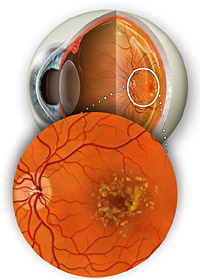 According to a statement from EyeOnAMD.com, approximately 15 million people in the United States have AMD, and more than 1.7 million Americans have the advanced form of the disease, known as wet AMD, which is more than cases of glaucoma and cataracts combined.
About 200,000 new cases of wet AMD are diagnosed each year in North America. As a result of the aging baby boomer population, said EyeOnAMD.com, the National Eye Institute estimates that the prevalence of advanced AMD will grow to nearly 3 million by the end of the next decade.
WebMD.com reports that eating fatty fish might be a way to reduce the risk of developing AMD.
The findings of a new study appear in the “Archives of Opthalmology.”
Women in particular, the study found, benefited the most from eating fatty fish such as tuna, salmon, trout and dark-meat fish at least once a week.
 Said WebMD: “Women in the new study who got the highest amounts of docosahexaenoic acid (DHA), an omega-3 fatty acid found in fish, were 38% less likely to develop AMD than women who got the least DHA. Similar findings were seen regarding the highest consumption levels of eicosapentaenoic acid (EPA), another omega-3 found in fatty fish.
“What’s more, women who ate one or more servings of fatty fish per week — mainly canned tuna and dark-meat fish — were 42% less likely to be diagnosed with AMD compared with women who ate fish less than once a month.”
“Omega-3 fish oils are believed to have anti-inflammatory properties, so it’s plausible that these anti-inflammatory properties could be of benefit,” study researcher William G. Christen, ScD, an associate professor of medicine at Brigham and Women’s Hospital and Harvard Medical School in Boston, said to WebMD.

We specialize in providing our over 1,000,000 customers with relevant product and condition information created by our professional editorial staff which includes our team of medical writers, medical practitioners, and health educators. eDrugStore.com Staff on Facebook