

All women have facial hair, but for most of them, particularly those with lighter-colored hair, it poses no particular problem. But up to three out of every 20 premenopausal women suffer from hirsutism, a condition in which facial and body hair is excessive and unwanted.
The onset of menopause and the hormonal changes that accompany it can exacerbate the problem in those who already suffer from hirsutism and introduce it in some who have not yet experienced it.
Regardless of what its precise causes may be, most women suffering from unwanted facial hair are most interested in ways that they can get rid of it. Fortunately, they have at their disposal a variety of facial hair removal methods, some more long lasting than others. Some of these methods are relatively effective but also painful.
Vaniqa
For those women who are looking for a painless way to slow the growth and unsightliness of facial hair, Vaniqa may be the answer. An FDA-approved prescription cream, Vaniqa has been clinically proven to slow the rate of facial hair growth and improve the appearance of women suffering from the problem. The topical medication doesn’t permanently remove the hair, but it significantly slows its growth rate. Those who use Vaniqa regularly as directed often find that new hair coming in is softer and finer and thus less noticeable.
The active ingredient in Vaniqa is eflornithine hydrochloride, which blocks the enzyme ornithine decarboxylase needed for hair growth. In this country, it has been approved only for the treatment of unwanted hair on the face and adjacent areas under the chin.
Available by prescription only, Vaniqa cream should be applied in a thin layer over affected areas of the face twice daily, at least eight hours apart. Refrain from washing the face for at least four hours after each application. Allergan Inc., the manufacturer of Vaniqa, says improvement may be seen as early as four to eight weeks after the start of treatment.
Most side effects of Vaniqa are mild and generally disappear upon continued use. These adverse effects may include burning or stinging of the skin, dizziness, dry skin, folliculitis, hair loss, headache, indigestion, itching or tingling of the skin, and rash. If any of these side effects should persist, talk to your doctor.
Depilatory Creams
Depilatory creams temporarily remove hairs visible above the surface of the skin for somewhere between a couple of days to a couple of weeks. Sold over the counter, they contain a chemical that breaks down the keratin bond in hairs, essentially dissolving the unwanted hair down to just below the skin. However, these creams are best suited for use on the legs and underarms and are not ideally suited for use on the face. Furthermore, allowing these creams to stay on the skin too long after application can remove the top layer of skin itself. And women with sensitive skin may find that they cannot use the creams at all without causing unpleasant side effects.
Waxing
Although more painful than depilatory creams, waxing of unwanted facial hair is quick and cost-efficient. Wax for hair removal comes in two main forms: soft and hard. The former is done with paper or fabric strips, while hard wax is removed without strips. For facial hair removal, cold hard wax is recommended by some hair removal specialists, although others prefer soft heated wax. While cold hard wax may not get all the fine hairs that are there, the risk of tearing your skin is reduced. It’s gentler and safer. However, facial hair removal by waxing is not for everybody. If you are on Retin-A or Accutane, you shouldn’t be using wax at all. Nor is it wise to use wax on skin that is sunburned or otherwise compromised.
Threading
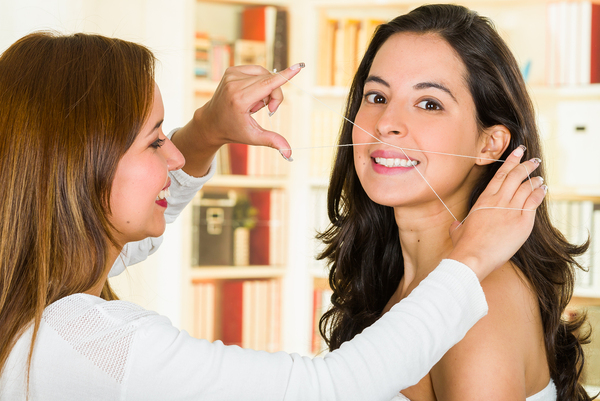
An increasingly popular form of facial hair removal, threading originated in the Middle East centuries ago. About as painful as waxing, it gets rid of the finest and smallest hairs with ease. A cotton thread is pulled along unwanted facial hair in a twisting motion, entrapping multiple strands of hair in a lasso-like circle that is then tightened and pulled, lifting the unwanted hairs right out of their follicles. Far less likely than waxing to leave the face red or swollen, threading is also relatively inexpensive.
Tweezing
Time-consuming and painful, tweezing is the least expensive form of facial hair removal. However, it is used most often for the removal of unwanted eyebrow hair to create a finer eyebrow line and not for removal of all facial hair. Because tweezing is usually self-administered, women with an artistic bent or a good sense of symmetry will likely fare best in creating eyebrow lines that look identical above both eyes. Pulling out individual unwanted hairs takes a good deal of time, and it’s hard to avoid catching a bit of skin as well as hair from time to time, which only adds to the discomfort of this technique.
Shaving
Although it’s probably the least desirable method of facial hair removal, shaving has one big advantage over other methods: It’s quick. But the drawbacks to shaving unwanted facial hair are many. Shaving only removes the shaft of the hair that is visible above the surface of the skin. New hair grows in quickly, and it is likely to be a bit darker and coarser. Shaving increases the likelihood of ingrown hairs and also exposes the user to the risk of cuts and nicks. Yet another risk is razor burn, a red rash that develops over the areas that were shaved.

Available since the late 19th century, electrolysis is the only FDA-approved method for permanent removal of all unwanted hair. This method is performed by trained electrolysis technicians who insert a needle into each individual follicle of hair that is to be removed. An electric current then passes through the needle to destroy the growth center of the hair. It’s a painstaking process and fairly expensive, but it’s an option for women who want permanent removal of undesirable facial hair.
Laser Hair Removal
Laser hair removal works best for women with dark hair and light skin. It isn’t effective on white hair, nor does it work well on blonde hair. The FDA has approved the use of lasers for permanent hair reduction but not permanent removal. Like electrolysis, it is expensive and time-consuming. Several treatments may be required to target all unwanted facial hair. In this form of hair removal, a laser technician destroys hair roots with powerful but narrowly focused beams of light.
If you opt to go with Vaniqa for unwanted facial hair removal, consider ordering the medication online from eDrugstore.ed, a member of Secure Medical’s chain of online drugstores. Based in Tempe, Arizona, eDrugstore sells only FDA-approved medications that are sourced from licensed U.S. pharmacies.
If you’re interested in reading additional articles about a wide array of consumer health topics, check out our blog.

We specialize in providing our over 1,000,000 customers with relevant product and condition information created by our professional editorial staff which includes our team of medical writers, medical practitioners, and health educators. eDrugStore.com Staff on Facebook