
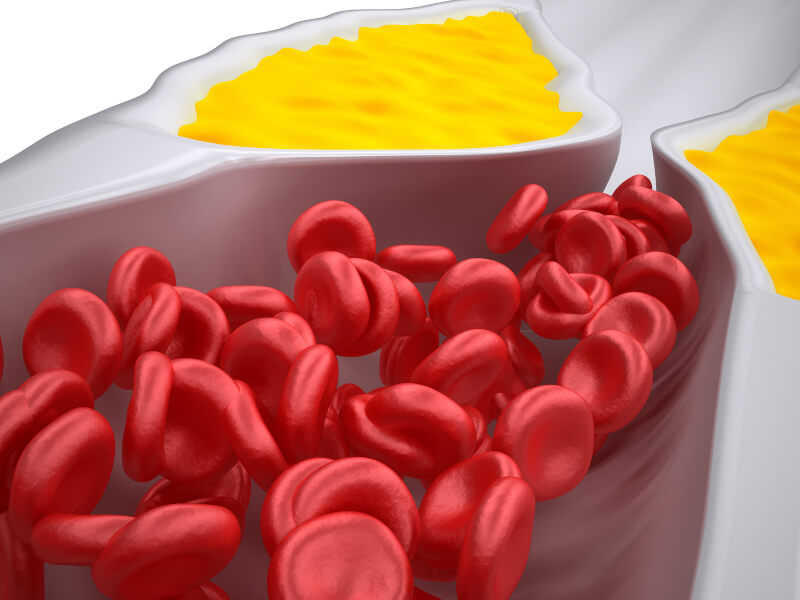

Arteries clogged with fatty plaque are antithetical to healthy erectile function. The less blood these arteries can carry, the less successful will be your efforts to achieve firm and long-lasting erections.
Arteries are the blood vessels that carry oxygen-rich blood to all the tissues of your body, including your vital organs that depend on a steady supply of oxygen and other essential nutrients to function normally. Anything that significantly diminishes arterial blood flow can eventually cause serious health consequences, including heart attack and stroke.
Although erectile dysfunction may not be quite as dire as a heart attack or stroke, it too is a possible consequence of vascular problems that develop as arteries become clogged. And because the arteries that supply the penis are only about a quarter the diameter of those feeding the heart, erectile dysfunction almost always appears well before serious heart problems develop.
Given the potential damage that can result from clogged arteries, it only makes sense to find out all that you can about what causes them and what can be done to prevent them and, if possible, reverse arterial damage that may have already occurred.
Anatomy of the Artery
For the most part, arteries carry oxygenated blood from the heart to tissues throughout the rest of the body. An exception are pulmonary arteries, which carry blood that has been depleted of its oxygen content back to the lungs to pick up life-sustaining oxygen. Veins return deoxygenated blood to the heart from the tissues and organs so that it can be reoxygenated and again sent out to the far corners of the body.
The outermost layer of an artery’s tissue is known as the tunica extrema, which consists of connective tissue that is made up of collagen fibers. Next to the tunica extrema lies the tunica media, made up of elastic tissue and smooth muscle cells. The innermost layer of the artery is called the tunica intima, which is composed primarily of endothelial cells. Artery walls composed of the layers identified here surround an open passage known as the lumen. It is through the lumen that blood actually passes.
What Makes Up Arterial Plaque?
The substances clogging arteries are known collectively as arterial plaque, and they include a wide array of substances that are carried through the blood. These substances include calcium, cellular waste, cholesterol, fat, and fibrin, a blood component that plays a key role in clotting. As this plaque builds up on inner artery walls, it inevitably decreases the amount of blood the arteries can carry.

Among the many culprits that accelerate the buildup of plaque on artery walls, most can be tied to lifestyle choices. The healthier your lifestyle, the less likely you are to experience serious vascular problems. Here are some of the more common causes of arterial plaque buildup:
Cholesterol: As you may already know, not all cholesterol is created equal. Low-density lipoprotein, or LDL, the so-called bad cholesterol, is a major contributor to arterial plaque. High-density lipoprotein, or HDL, can actually help undo some of the damage caused by LDL, by extracting some of the bad cholesterol in arterial plaque and carrying it back to the liver where it can be processed and eventually eliminated as waste.
Diabetes: High levels of glucose in your blood, such as those seen in diabetics as well as some pre-diabetics, seem to accelerate the buildup of plaque on the walls of your arteries. Getting blood sugar levels under tight control can help to minimize this type of damage but won’t eliminate it entirely.
Excess Weight: Carrying around extra pounds can also contribute to a buildup of plaque on artery walls. A South Korean research study, published in 2014, found a high incidence of subclinical coronary atherosclerosis in obese study participants who showed no evidence of metabolic syndrome. Metabolic syndrome refers to a cluster of health conditions that collectively increase the risk of heart disease, stroke, and diabetes.
High Blood Pressure: Uncontrolled hypertension also is known to hasten the buildup of plaque on artery walls. A widespread problem, high blood pressure usually has no symptoms, and as a consequence, many cases go undiagnosed or are diagnosed only after the process has already caused considerable damage. According to WebMD.com, roughly a third of all Americans suffer from high blood pressure.
Smoking: Cigarette smoke — even secondhand smoke — irritates the thin layer of endothelial cells that make up the tunica intima on the inner walls of arteries. For reasons that are not completely understood, the resulting endothelial dysfunction seems to accelerate the progress of atherosclerosis, the medical term for the buildup of plaque on artery walls.
Because the arteries that supply the penis are significantly smaller than those that serve the heart and brain, as noted earlier, erection problems almost always show up before a heart attack or stroke. And for that early warning of vascular problems you should be thankful, because you have a variety of options for dealing with erectile dysfunction, whereas a massive heart attack or stroke can be fatal.
Heed Warning and Take Action

Erection problems may begin to surface before you’ve even reached the point that you are suffering from full-blown erectile dysfunction. If you take action early enough, you may be able to regain erectile function and also avoid serious damage to both your heart and brain, which also require an uninterrupted and strong flow of blood to function at optimal levels.
To lower your risk of clogged arteries, you can make healthy lifestyle choices that not only minimize the buildup of arterial plaque but may even help to strip away some of the plaque that has already accumulated.
Eat a Healthy Diet
Eating a healthy diet is an important first step. The key elements of such a diet are generous servings of fresh fruits and vegetables, whole grains, fish (at least twice a week), low sodium intake, and avoidance of sugar-sweetened beverages. Try to minimize red meat consumption.
Regular visits to your personal physician can help ensure that your blood pressure and cholesterol levels are maintained within a healthy range. And your doctor can take swift action to treat health problems conducive to atherosclerosis as they arise rather than well after the fact.
Kick the Habit
Stop smoking and keep your distance from those who do smoke. If you’re a longtime smoker who’s having problems kicking the habit, reach out for a support group to help you get it done. There are also a number of smoking cessation products on the market that may make the process of withdrawal from nicotine less painful.
If you’re carrying around more weight than you should, shed those extra pounds. Sticking to a healthy diet, such as that outlined above, can help to ensure that you don’t pack on extra pounds in the future.
While diet can play a key role in treating elevated cholesterol levels, you may need a little help in the form of medication to keep lipid levels under control. Your doctor can determine if using a statin drug to control cholesterol makes sense for you.
For more informative articles like this one, check out our blog.
Photo credit: Jeffrey Lorenz
Don Amerman is a freelance author who writes extensively about a wide array of nutrition and health-related topics.

We specialize in providing our over 1,000,000 customers with relevant product and condition information created by our professional editorial staff which includes our team of medical writers, medical practitioners, and health educators. eDrugStore.com Staff on Facebook