



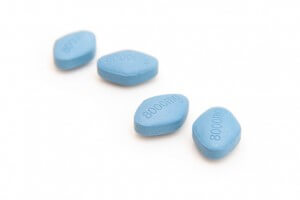
With Pfizer’s patent for Viagra expiring in China in May 2014, the spotlight now shifts to the world’s most populous country for the debut of the latest generic version of the drug to vie for a share of the impotence drug market.
The latest development in China mirrors what is happening in numerous markets around the world as Pfizer’s patent for Viagra expires and generic versions emerge in a bid to snag some of the popular drug’s market share. In the next few years, many more generic versions of Viagra are certain to come to market, ensuring a more competitive climate pricewise for impotence drugs.
This fall, Chinese drug manufacturer Guangzhou Baiyunshan Pharmaceutical Company introduced its generic equivalent of Viagra called Jinge (meaning ¨gold dagger¨) at a press conference in the Chinese capital of Beijing.
In development for more than a decade, the new generic version of Viagra was greeted with considerable fanfare as attractive young models — both female and male — walked the stage waving packages of the new pills, which had just won final approval from the China Food and Drug Administration.
Half the Price of Viagra
Priced at roughly half the price Viagra charged for a comparable dose, Jinge hopes to capture a big share of the Chinese market for Viagra, which rang up $145 million in sales in 2013. Among the other major impotence drugs available in China, Viagra has been by far the best-selling, with 2013 sales nearly three times those of Cialis at $50 million and more than 10 times those of Levitra at $13 million.
However, Jinge’s manufacturer is hoping that the availability of a lower-priced alternative to Viagra and the other impotence drugs will attract more buyers among the 127 million Chinese men estimated to suffer from erection problems.
Only 10% Seek Help
Of the millions of Chinese men suffering from impotence, it is estimated by government health authorities that only about 10 percent seek medical care for their problem. Lower prices should help to spur sales of Jinge and put increased pressure on its brand-name competitors to lower their prices to maintain market share.
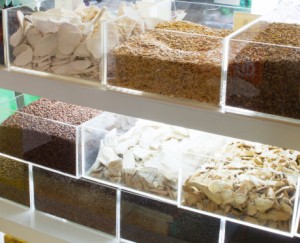
However, China is a country that for centuries has put a high value on traditional medicine, the primary drugs for which consist of herbal remedies. This approach to medicine continues to be popular among many Chinese, a number of whom have turned to ancient herbal remedies in an effort to relieve their erection problems.
New Herbal Remedy
Not content to depend solely on its newly introduced Jinge, Guangzhou Baiyunshan in October introduced an herbal remedy for impotence called Tiema, which means ¨Iron Horse¨ in Chinese. The drugmaker’s research and development is said to be working feverishly on as many as 40 drugs and health food products all designed to cure or at least relieve erection problems.
With this bold new advance into drugs targeting China’s underserved population with erection problems, Guangzhou Baiyunshan hopes to sharply increase its total sales within the next three years. Helped by Jinge and Tiema, the drugmaker expects its 2014 sales to reach $10.6 billion, an increase of 19 percent from 2013 sales of $8.9 billion. By 2016 or 2017, it hopes to ring up sales of $16.3 billion, which would represent an increase of 83 percent over its 2013 sales total.
Slow to Catch On in China
Viagra, the biggest selling brand-name impotence drug in China, was the first of the so-called PDE5 inhibitors to be introduced anywhere in the world. While the drug found an enthusiastic market reception almost everywhere else, China’s somewhat less open attitudes about sex made these drugs slower to catch on.
In an article for China’s Economic Observer, writer Luo Fengyao recounts the frosty reception Viagra got during its 1999 approval review meeting, noting that several of the country’s sexologists voiced fears that the drug would cause a spike in sexual violence.
Pfizer finally got the go-ahead to sell Viagra in China in 2000 after doctors from Peking University reported that the drug was more than 80 percent effective in clinical trials. They told regulatory authorities that in their view the drug would not only promote harmonious marital relations but would also bring social stability in general.
Sales Slowly Grew
However, because of deeply ingrained repressive attitudes toward sex, sales of Viagra and the impotence drugs that followed were slow in the beginning. Recalling the years immediately following Viagra’s approval in China, Dr. Guo Ying-lu of Peking University’s First People’s Hospital recalled, ¨To promote the medicine and to help with Chinese men’s health, we had to give weekly lectures for two consecutive years on television.¨
Another story, perhaps apocryphal, claims that Pfizer hired attractive women, well-informed about the drug’s efficacy, to approach potential clients in pharmacies to help promote Viagra. According to this anecdote, the women typically would say, ¨I know you are normal, sir,¨ before going on to extol the drug’s possible use for less fortunate friends of theirs. Luo Fengyao reports, ¨The tactic not only worked but gave confidence to shy Chinese men.¨
Generics Popping Up Everywhere
Although China is the latest major market in which Pfizer’s patent for Viagra has expired, similar scenarios are being played out in other markets around the world. The pharmaceutical giant’s Viagra patent has expired in a number of other countries and regions, including Canada, South Korea, and most of the European Union.
In the United States, Pfizer’s patent for Viagra won’t expire until April 2020. However, under the terms of an agreement Pfizer reached with Israeli-based Teva Pharmaceuticals in December 2013, the latter will be permitted to begin marketing a generic version of Viagra on December 11, 2017, or earlier under certain circumstances. In exchange for a license to produce its generic version, Teva will pay Pfizer a royalty.
Teva Generics Already on the Market
Teva is already marketing generic versions of Viagra in several other markets, including Canada and a number of European Union member countries. Another international drugmaker marketing generic formulations of the drug is Swiss-based Actavis.
As previously mentioned, Viagra and its active ingredient, sildenafil citrate, belong to a family of drugs known as PDE5 inhibitors. They get their name because they work by temporarily disabling an enzyme known as phosphodiesterase-5, which can compromise blood flow to the penis and thus make it difficult or even impossible to achieve an erection.
How Erection Works
Erection begins with feelings of sexual desire that originate in the brain. Such feelings signal the brain to send a flood of nitric oxide directed to the pelvic region. The nitric oxide in turn activates a chemical substance known as cyclic guanosine monophosphate, or cGMP, which relaxes the smooth muscles that line the blood vessels supplying the penis. As these blood vessels relax, blood rushes in and fills the erectile tissue of the penis, creating an erection.
The primary role of the PDE5 enzyme is to break down cGMP. The PDE5 inhibiting drugs hold the enzyme at bay so that cGMP can facilitate an erection strong enough and long lasting enough for sexual intercourse. Typically, the PDE5 inhibitors are effective for four to five hours.
Don Amerman is a freelance author who writes extensively about a wide array of nutrition and health-related topics.

We specialize in providing our over 1,000,000 customers with relevant product and condition information created by our professional editorial staff which includes our team of medical writers, medical practitioners, and health educators. eDrugStore.com Staff on Facebook