


There’s an ancient city called El Peru-Waka’ in the rainforests of northern Guatemala that, it seems, holds the tomb of the seventh-century warrior queen Lady K’abel.
Lady K’abel, a great seventh-century ruler of the Mayan people, was discovered in her tomb in an ancient Mayan city. — Click to Tweet.
Excavators discovered a body in the city’s ruins. Alongside the body was a white jar shaped like a conch shell with the head and arm of a woman carved at the opening.
The artifact also had four hieroglyphic inscriptions that suggest it was K’abel’s possession. These inscriptions strongly suggest that the entire tomb was hers.
Researchers Reaction
As David Friedel, one of the archaeologists working on the site, suggests, “Nothing is ever proven in archaeology because we’re working with circumstantial evidence. But in our case we have a carved stone alabaster jar that is named K’abel’s possession … [this find] is as close to a smoking gun” as it gets in archaeology.
The tomb contains other evidence that K’abel’s remains are buried there, such as the large spiny red oyster shell found on the lower torso of the remains. Mayan queens in the late classic period, which includes K’abel’s reign, often wore such shells as girdle ornaments, while the kings did not.
Researchers know about the shell ornamentation by looking at portraits carved on ceramic vessels and stone slabs, which are also known as stelas.
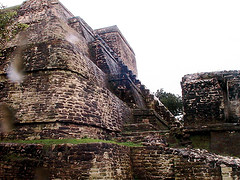
K’Abel’s Life
The entire city of El Peru Waka’ belonged to the classic Mayan civilization, which lasted from 200 A.D. to 900 A.D.
K’abel is believed to have reigned with her husband, king K’inich Bahlam, from 672 A.D. to 692 A.D. One of the most significant findings is her title, “Kaloomte’,” which translates to “Supreme Warrior.” The title suggests that she had even higher authority than her husband.
Conclusion
None of the research associated with David Freidel’s findings has yet been published in a peer-reviewed journal, but excavations have been underway since 2003 and publishing is expected soon.
The conclusions they’ve reached, however, are unlikely to be hotly contested.

We specialize in providing our over 1,000,000 customers with relevant product and condition information created by our professional editorial staff which includes our team of medical writers, medical practitioners, and health educators. eDrugStore.com Staff on Facebook