
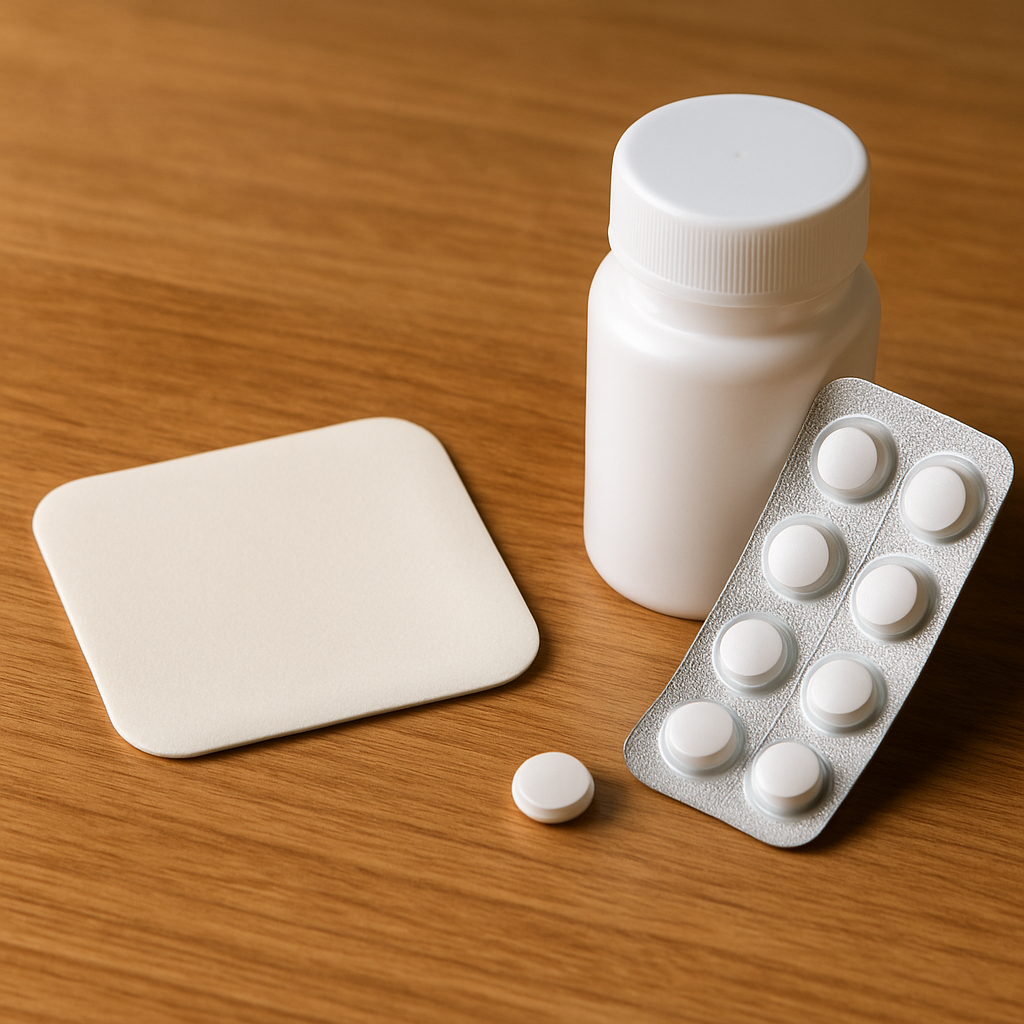

If you’re weighing the estradiol patch vs pill for hot flashes, night sweats, or vaginal dryness, the safety question is usually the one that keeps people up at night. Your sister did fine on the pill. Your friend swears by the patch. Your doctor mentioned blood clots, and now you’re trying to figure out what that actually means for you.
The short answer: both forms contain the same hormone, but they behave very differently inside your body. That difference matters, especially if you have any cardiovascular risk factors.
According to the North American Menopause Society, transdermal estrogen (the patch) appears to carry a lower risk of venous thromboembolism than oral estrogen for most women. That single fact drives a lot of the modern prescribing conversation, but it’s not the whole story.
How the Estradiol Patch vs Pill Actually Work
Both deliver 17-beta estradiol, the same estrogen your ovaries used to produce in abundance. The delivery route is where things diverge.
The pill gets swallowed, absorbed through the gut, and then runs through the liver before it ever reaches the rest of your body. This is called first-pass metabolism. The liver sees a big estrogen load and responds by making more clotting factors, more sex hormone binding globulin, and more triglycerides.
The patch sticks to your skin, usually on the lower abdomen or buttock, and releases estradiol slowly into the bloodstream. It bypasses the liver almost entirely on the first pass. Your liver still processes the hormone eventually, just not in one concentrated dose.
That’s the mechanical difference. Now here’s why it matters clinically.
Blood Clot Risk: The Headline Difference
This is where the estradiol patch vs pill comparison gets real.
Multiple large observational studies, including a well-known BMJ analysis from 2019, found that oral hormone therapy roughly doubles the risk of venous thromboembolism, while transdermal estradiol at standard doses did not show a meaningful increase in clot risk compared to non-users.
The absolute numbers are still small for healthy women in their 50s. We’re talking about going from roughly 1 in 1,000 per year to about 2 in 1,000 with the pill. But if you have additional risk factors, that math shifts fast.
Higher-risk situations where the patch is usually preferred:
- History of DVT or pulmonary embolism
- Obesity (BMI over 30)
- Smoking, especially over age 35
- Migraine with aura
- Known clotting disorder (Factor V Leiden, prothrombin mutation)
- Personal or strong family history of stroke
If none of those apply to you, the absolute clot risk on oral estradiol is still low. That’s worth keeping in perspective.
Stroke and Cardiovascular Effects
The pattern roughly mirrors clot risk. Oral estrogen has been linked in some analyses to a small increase in ischemic stroke risk, particularly at higher doses. Transdermal estradiol at low to standard doses has not shown the same signal in most studies.
For women starting hormone therapy within 10 years of menopause and under age 60, the Mayo Clinic summary on hormone therapy notes that overall cardiovascular risk is low for healthy candidates. The patch just tends to be the safer bet when any vascular concern is on the table.
This is similar to the kind of route-of-administration trade-off you see with other hormones. If you’ve read our comparison of testosterone gel vs injections, the principle is the same: skipping first-pass liver metabolism usually means a steadier, gentler systemic effect.
Other Side Effects Worth Knowing
The patch and pill share most of the common estrogen side effects, but the frequency and severity often differ.
More common with the pill:
- Nausea, especially in the first few weeks
- Headaches
- Gallbladder problems (oral estrogen roughly doubles gallstone risk)
- Higher triglycerides
- Breast tenderness
More common with the patch:
- Skin irritation at the application site
- Patches falling off in hot weather, sweat, or the pool
- Occasional uneven absorption if rotated poorly
What I see most often in practice: women who get queasy on the pill or have a history of gallstones switch to the patch and feel dramatically better. Women who hate the idea of something stuck to their skin for days at a time often prefer the pill, assuming they’re low-risk.
One more consideration. If you still have your uterus, estrogen alone (whether patch or pill) raises the risk of endometrial cancer. You’ll need a progestogen added in. Our breakdown of estradiol vs conjugated estrogens for menopause goes deeper on which estrogen formulations pair well with which progestins.
Cost and Convenience
Generic oral estradiol is genuinely cheap, often under $15 a month with a discount card. Generic estradiol patches run more, sometimes $30 to $80 a month depending on brand and pharmacy, though many insurance plans cover both.
You can compare current pricing on generic estradiol formulations at edrugstore.com if you’re trying to figure out what your out-of-pocket cost would actually look like.
Convenience cuts both ways. The pill is one swallow a day, easy to forget but easy to restart. The patch is changed once or twice weekly depending on the formulation, which some women love (set it and forget it) and others find annoying (especially if it peels in the shower).
Worth noting: hormone therapy isn’t the only menopause-related medication decision worth thinking through carefully. If you’re also evaluating contraceptive options during perimenopause, our piece on norethindrone vs drospirenone mini-pills covers similar safety trade-offs.
When to Call Your Prescriber
Whichever form you’re on, contact your doctor promptly for:
- Sudden leg pain or swelling, especially one-sided
- Chest pain or shortness of breath
- Sudden severe headache, vision changes, or weakness on one side
- Unusual vaginal bleeding after starting therapy
- Yellowing of the skin or eyes
These can signal clots, stroke, or liver issues, all of which need urgent evaluation.
The Bottom Line on Estradiol Patch vs Pill
For most healthy women under 60 starting hormone therapy within 10 years of menopause, both options are reasonable. The estradiol patch vs pill decision usually comes down to your personal risk profile: if you have any clotting, cardiovascular, migraine, or gallbladder risk factors, the patch is generally the safer choice. If you’re low-risk and prefer a daily pill, oral estradiol is still a well-established option.
Talk to your prescriber about your full medical history, including family history of clots and stroke. Ask specifically whether your risk profile favors the patch. And if cost is a factor, ask your pharmacist about generic estradiol pricing, since both forms are available as generics.
This article is for informational purposes only and is not medical advice. Always consult a licensed pharmacist or physician before starting, stopping, or changing any medication.
References
- North American Menopause Society, clinical guidance on hormone therapy route and risk.
- BMJ 2019 analysis of HRT and VTE risk, large observational data comparing oral vs transdermal estrogen clot risk.
- Mayo Clinic: Hormone therapy overview, patient-facing summary of menopausal hormone therapy risks and benefits.

Dr Steven Schlosser
Dr. Schlosser graduated from Lafayette College Phi Beta Kappa and attended Georgetown Medical School. He had 4 years of medical residency training at Tufts University in Boston in both Gynecology and Internal Medicine. He has had a spotless medical career for the past 40+ years and is Board Certified. Learn More