
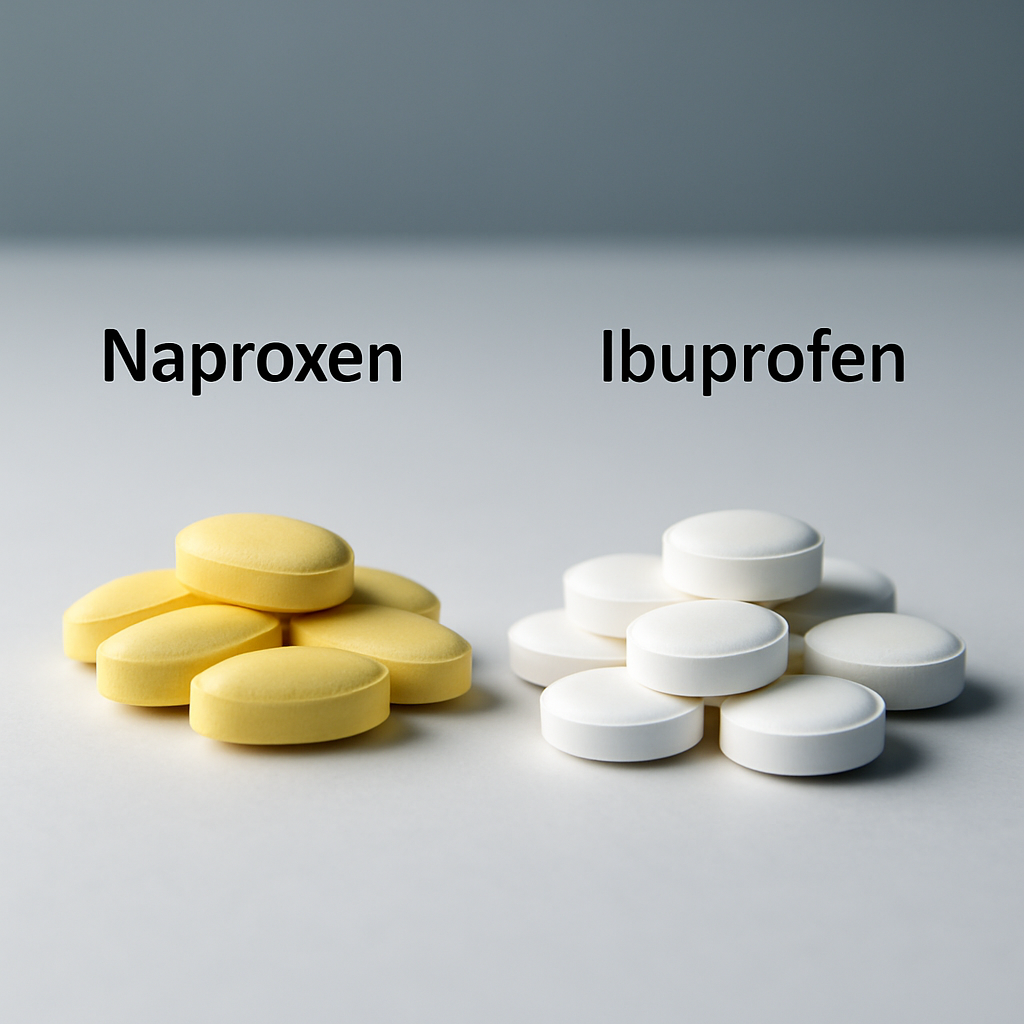

If you’ve been reaching for an over-the-counter painkiller most days, the naproxen vs ibuprofen question stops being academic pretty quickly. Both are nonsteroidal anti-inflammatory drugs (NSAIDs). Both work. And both come with real risks when you take them for months or years instead of a few days.
The honest answer to which one is safer long-term isn’t the same for every person. It depends on your heart, your kidneys, your stomach lining, and what else is in your medicine cabinet. But there are patterns the research has made fairly clear, and it’s worth knowing them before you settle into a daily habit.
Here’s what the evidence actually shows, where the two drugs diverge, and how clinicians typically pick between them.
How Naproxen vs Ibuprofen Actually Work
Both drugs block COX-1 and COX-2 enzymes, which is how they shut down the prostaglandins that drive pain and inflammation. The mechanism is nearly identical. The differences that matter clinically come down to how long they stick around in your body and how strongly they push on certain side-effect pathways.
Ibuprofen has a short half-life, roughly 2 to 4 hours. You dose it three or four times a day for steady relief. Naproxen lasts much longer, around 12 to 17 hours, which is why twice-daily dosing usually works. That longer exposure window is part of why the safety profiles differ, even though the drugs look so similar on paper.
The FDA requires both drugs to carry boxed warnings about cardiovascular and gastrointestinal risk, and those warnings were strengthened in 2015 after a comprehensive review of the evidence.
Cardiovascular Risk: Where Naproxen Looks Better
This is the area where naproxen vs ibuprofen shows the clearest gap. Multiple large meta-analyses, including the influential CNT Collaboration analysis published in The Lancet, found that naproxen carries a lower risk of heart attack and stroke than ibuprofen or diclofenac at anti-inflammatory doses.
The PRECISION trial, a randomized study of more than 24,000 arthritis patients, reinforced this. Naproxen had cardiovascular event rates similar to celecoxib, while ibuprofen trended worse, especially at higher doses.
For a patient with known heart disease, hypertension, or strong cardiovascular risk factors, that data nudges most clinicians toward naproxen when an NSAID is needed at all. Not zero risk. Just less of it.
GI and Kidney Risks: Where Ibuprofen Has a Small Edge
Naproxen’s longer half-life cuts the other way when it comes to the stomach. Both drugs can cause ulcers and GI bleeding, but naproxen’s continuous COX-1 blockade gives it a slightly higher bleeding risk in head-to-head observational data.
A proton pump inhibitor like omeprazole is often added when patients need an NSAID daily, regardless of which one. If you’re already on a blood thinner, an SSRI, or a steroid, the bleeding risk goes up further, and that’s a conversation worth having with your prescriber before starting either drug. (For people juggling NSAIDs with other pain meds, this overview of whether tramadol and ibuprofen can be combined safely is worth a read.)
Kidney risk is roughly comparable between the two. NSAIDs reduce renal blood flow, and chronic use raises the risk of acute kidney injury and chronic kidney disease, especially in people who are dehydrated, elderly, or already on an ACE inhibitor or diuretic. The National Kidney Foundation flags this combination as one of the most common preventable causes of kidney damage they see.
A quick comparison of the two
- Cardiovascular safety: naproxen generally lower risk
- GI bleeding: ibuprofen slightly lower risk at equivalent doses
- Kidney impact: roughly equal, both meaningful with chronic use
- Blood pressure: both can raise it, ibuprofen often more in studies
- Dosing convenience: naproxen twice daily, ibuprofen every 4 to 6 hours
Topical Alternatives Are Underused
One thing worth flagging before you commit to a daily oral NSAID at all: topical diclofenac gel delivers meaningful relief for hand, knee, and foot arthritis with a fraction of the systemic exposure. We’ve covered the tradeoffs in detail in our piece on diclofenac gel versus oral ibuprofen for pain relief, and for many patients with localized pain, it’s the smarter long-term play.
Topical NSAIDs don’t raise cardiovascular risk in any meaningful way, and the GI side effects are dramatically reduced. They’re not appropriate for widespread pain or systemic inflammation, but for one stubborn joint, they often do the job.
Who Should Pick Which
A few practical patterns from clinical practice:
- Healthy adult, occasional use: Either drug is fine. Ibuprofen is cheaper and easier to find in low-dose form.
- Cardiovascular disease or high CV risk: Naproxen is generally preferred among NSAIDs, though acetaminophen or topical options should be tried first.
- History of ulcer or GI bleed: Avoid both if possible. If you must use one, pair it with a PPI and choose the lowest effective dose.
- Kidney disease (CKD stage 3 or worse): Avoid both. Talk to your nephrologist about alternatives.
- On daily low-dose aspirin for heart protection: Ibuprofen can blunt aspirin’s antiplatelet effect if taken at the wrong time. Naproxen has a similar interaction. Spacing matters, and your pharmacist can help time them.
If you’re shopping for either, you can compare prices on naproxen and ibuprofen at edrugstore.com and talk to a pharmacist about which fits your situation.
How to Use Either NSAID More Safely Long-Term
If chronic use is the reality, a few habits cut the risk meaningfully:
- Use the lowest effective dose, for the shortest duration that controls symptoms.
- Take with food, though this helps less than people think for ulcer prevention.
- Get periodic blood pressure checks and a basic metabolic panel to watch kidney function.
- Don’t double up NSAIDs. Ibuprofen plus naproxen plus aspirin is a recipe for trouble.
- Reassess every few months. Many people stay on daily NSAIDs out of habit long after the original reason has resolved.
For a fuller breakdown of everyday dosing tradeoffs, our companion piece on naproxen vs ibuprofen for daily use goes deeper into the routine choices.
Bottom Line
In the naproxen vs ibuprofen debate for long-term use, naproxen edges out ibuprofen on cardiovascular safety, while ibuprofen has a slightly gentler GI profile at equivalent doses. Neither is truly safe for indefinite daily use without monitoring. The real winner is often the lowest dose, of whichever drug fits your risk profile, taken for the shortest time that controls your pain. Talk to your pharmacist or prescriber about which side of the naproxen vs ibuprofen tradeoff makes sense for your heart, kidneys, and stomach.
This article is for informational purposes only and is not medical advice. Always consult a licensed pharmacist or physician before starting, stopping, or changing any medication.
References
- FDA Drug Safety Communication on NSAIDs, strengthened cardiovascular warning labels for non-aspirin NSAIDs.
- Coxib and traditional NSAID Trialists’ Collaboration, The Lancet, large meta-analysis comparing CV and GI risk across NSAIDs.
- National Kidney Foundation on pain meds and kidney risk, guidance on NSAID use and renal safety.

Dr Steven Schlosser
Dr. Schlosser graduated from Lafayette College Phi Beta Kappa and attended Georgetown Medical School. He had 4 years of medical residency training at Tufts University in Boston in both Gynecology and Internal Medicine. He has had a spotless medical career for the past 40+ years and is Board Certified. Learn More