
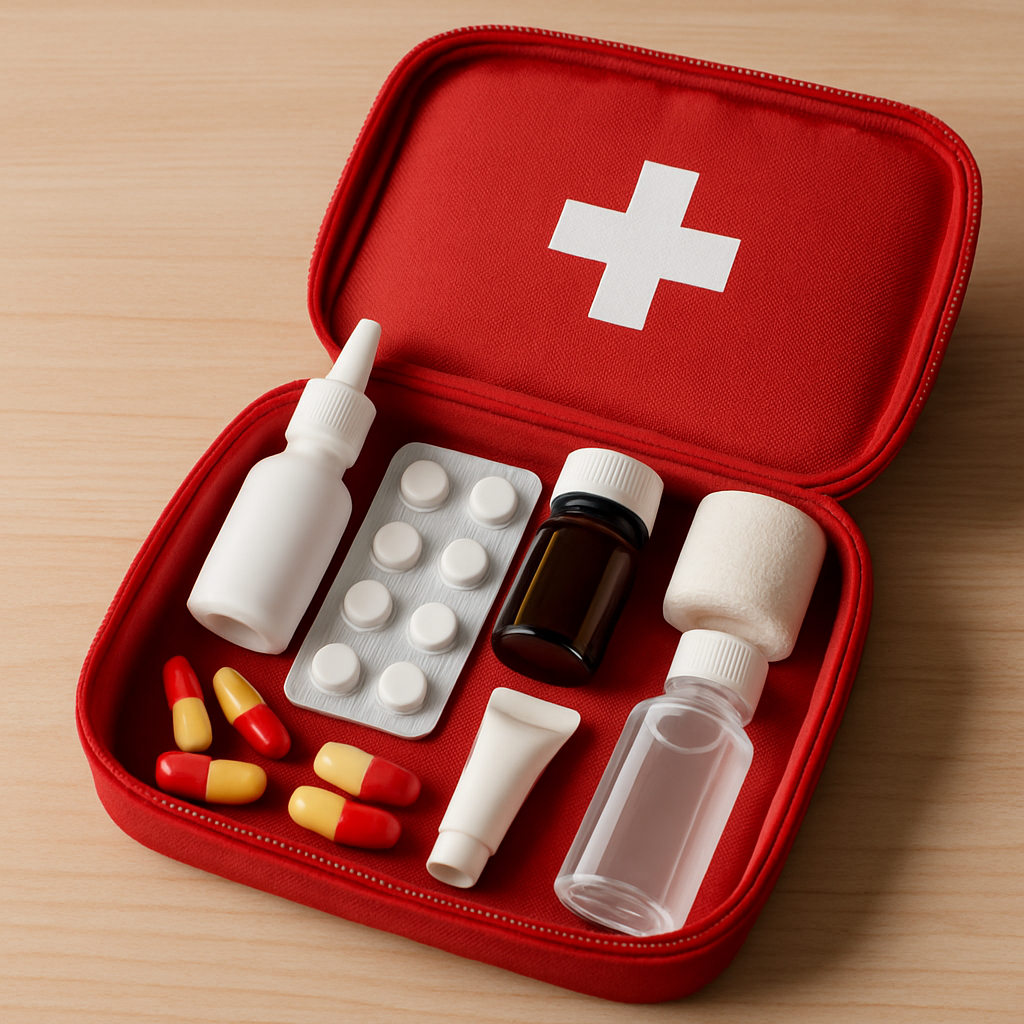

Most people build a home emergency kit around flashlights, batteries, and bottled water, then forget the part that actually matters when someone is bleeding, burning up with fever, or having an allergic reaction at 2 a.m. The medications.
A well-stocked home emergency kit isn’t about hoarding pills. It’s about having the right seven or eight items within arm’s reach when the pharmacy is closed, the roads are iced over, or a kid wakes up with a 103-degree fever on a Sunday night.
What follows is what a pharmacist would actually put in a household kit, why each one earns its spot, and the practical details (expiration, storage, dosing caveats) that most online lists skip. The Red Cross recommends keeping a basic medication supply alongside your other emergency gear, and the CDC’s emergency preparedness guidance says the same.
1. Acetaminophen (Tylenol)
Acetaminophen belongs in every home emergency kit because it covers two of the most common middle-of-the-night problems: fever and pain. It’s safer than ibuprofen for people on blood thinners, those with kidney issues, and most pregnant patients (though always confirm with a prescriber).
The catch most patients miss is the ceiling. Adults should not exceed 4,000 mg in 24 hours, and the FDA recommends staying closer to 3,000 mg for routine use. Liver damage from accidental overdose is more common than people realize, especially when acetaminophen is hidden inside cold-and-flu combo products.
Keep both adult tablets and a children’s liquid formulation if kids live in or visit the home.
2. Ibuprofen (Advil, Motrin)
Ibuprofen handles what acetaminophen can’t quite reach: inflammation. Sprains, dental pain, menstrual cramps, and the deep muscle aches of the flu all respond better to an NSAID.
Avoid it if you have kidney disease, active ulcers, uncontrolled hypertension, or you’re on anticoagulants. For combination questions like whether to layer it with another painkiller, our guide on taking tramadol with ibuprofen safely covers the real interaction risk.
3. Diphenhydramine (Benadryl) and an Epinephrine Auto-Injector
Allergic reactions are the emergency where minutes count, and they’re the reason an antihistamine plus an auto-injector both deserve a slot in your home emergency kit.
Diphenhydramine works for mild reactions: hives, itching, swelling that isn’t affecting breathing. For anything involving the airway, lips, tongue, or wheezing, epinephrine is the only drug that actually stops anaphylaxis. Antihistamines won’t save someone whose throat is closing.
If anyone in your household has a known severe allergy (food, insect sting, latex, medication), an in-date auto-injector is non-negotiable. Our breakdown of EpiPen vs Auvi-Q walks through which device fits which family.
A few practical notes:
- Auto-injectors expire, usually around 12 to 18 months. Set a calendar reminder.
- Store at room temperature. Not in a hot car, not in the freezer.
- After using one, call 911 immediately. Epinephrine buys time, it isn’t the finish line.
4. Loperamide (Imodium) for Acute Diarrhea
Stomach bugs and food poisoning don’t wait for business hours. Loperamide slows gut motility and buys you time until things settle, which matters most for adults who can’t afford to be dehydrated and stuck near a bathroom.
Don’t use loperamide if there’s bloody stool, high fever, or suspected food poisoning from raw seafood or undercooked poultry. Those cases need a clinician, not a slowdown drug. According to MedlinePlus, the typical adult dose is 4 mg initially, then 2 mg after each loose stool, capped at 8 mg per day for over-the-counter use.
5. Oral Rehydration Salts or Pedialyte
This one isn’t technically a drug, but it earns a place anyway. Dehydration from vomiting, diarrhea, or heat illness sends more people to the ER than anything else on this list combined. Plain water doesn’t replace electrolytes fast enough when someone has lost a lot of fluid.
Powdered oral rehydration packets store almost indefinitely and weigh nothing. Toss a few in the kit. Worth it.
6. Hydrocortisone 1% Cream
For bug bites, poison ivy, contact dermatitis, and small patches of eczema flares, a tube of 1% hydrocortisone covers about 80% of skin emergencies that come up in a household. Don’t use it on the face for more than a few days, and skip it on broken skin or suspected infections.
Pair it with an antibiotic ointment like bacitracin or a triple antibiotic for minor cuts. Cleveland Clinic’s wound care guidance covers when home care is enough and when you need stitches or evaluation.
7. Aspirin (81 mg and 325 mg)
The reason aspirin makes the list isn’t headache relief. It’s the suspected heart attack. The American Heart Association recommends that a person experiencing symptoms of a heart attack chew one regular-strength (325 mg) aspirin, or four baby aspirin, while waiting for EMS, assuming they have no allergy or bleeding contraindication.
This is the single drug in your home emergency kit most likely to save a life in the first ten minutes of a cardiac event. Keep it accessible, not buried in the back of a cabinet.
Personal Prescriptions and a Few Honorable Mentions
A home emergency kit also needs a 3-to-7-day supply of any daily prescription anyone in the household depends on: blood pressure pills, insulin, thyroid meds, inhalers, seizure medications. Rotate them so they don’t expire.
A few other items worth having nearby: glucose tablets for diabetics, a thermometer that actually works, sterile saline for eye and wound irrigation, and a current medication list for each household member. If anyone in your house has seasonal allergies severe enough to complicate a respiratory illness, our comparison of Flonase vs Nasacort and the Montelukast vs Cetirizine guide can help you pick a daily controller worth keeping stocked.
You can compare prices and refill many of these basics, including generic versions, at edrugstore.com.
Storage, Expiration, and One Last Reminder
Heat and humidity kill medications faster than people realize. The bathroom medicine cabinet is actually one of the worst places to store a kit. A bedroom closet or hallway linen shelf, both cooler and drier, works better. Check expirations every six months when the clocks change.
Build the home emergency kit once, label everything clearly, and tell every adult in the household where it lives. The goal isn’t to play doctor. It’s to handle the small emergencies confidently and buy time during the big ones. Talk to your pharmacist about which versions of these medications fit your family’s specific health conditions, and ask whether any of your daily prescriptions should be added to your home emergency kit rotation.
This article is for informational purposes only and is not medical advice. Always consult a licensed pharmacist or physician before starting, stopping, or changing any medication.
References
- FDA: Acetaminophen Information, dosing limits and liver safety guidance.
- CDC: Personal Needs for Emergency Preparedness, federal recommendations for household medication supplies.
- American Red Cross: Survival Kit Supplies, recommended emergency kit contents including first aid.
- American Heart Association: Treatment of a Heart Attack, aspirin use during suspected cardiac events.
- MedlinePlus: Loperamide, adult dosing and safety limits.
- Cleveland Clinic: Cuts and Lacerations, home wound care and when to seek help.

Dr Steven Schlosser
Dr. Schlosser graduated from Lafayette College Phi Beta Kappa and attended Georgetown Medical School. He had 4 years of medical residency training at Tufts University in Boston in both Gynecology and Internal Medicine. He has had a spotless medical career for the past 40+ years and is Board Certified. Learn More