


Longevity supplements have a reputation problem. A lot of them come with sweeping claims that outrun the actual science by a mile. The three products in eDrugstore’s Healthy Aging Bundle are different. These are among the most actively researched compounds in metabolic health and longevity right now, and the evidence behind them is worth understanding before you buy.
Here’s an honest look at each one.
Berberine with Ceylon Cinnamon
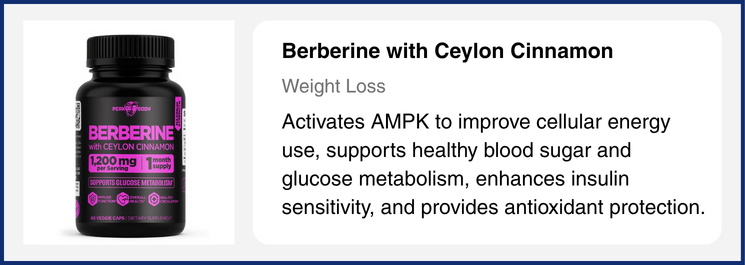
What Is Berberine?
Berberine is a natural alkaloid extracted from plants in the Berberis family. It has centuries of use in traditional Chinese medicine for digestive and metabolic conditions, and over the past few decades it’s accumulated a serious clinical track record. Ceylon cinnamon — a milder variety than the cassia cinnamon in most grocery stores — has its own modest research supporting glucose metabolism and is a natural pairing.
What the Research Shows
Of the three products in this bundle, berberine has the most consistent human trial evidence. Studies have shown meaningful reductions in fasting blood glucose, HbA1c (a 90-day average blood sugar marker), and post-meal glucose spikes in people with type 2 diabetes.
Beyond blood sugar, berberine has been shown to improve LDL cholesterol, total cholesterol, and triglycerides, along with reducing inflammatory markers like IL-6, TNF-alpha, and C-reactive protein.
That’s a meaningful range of metabolic benefits, and the clinical evidence supports all of it.
Who Benefits Most
The strongest evidence is in men managing blood sugar, insulin sensitivity, or elevated cholesterol, especially those with prediabetes, metabolic syndrome, or early cardiovascular risk. If any of those describe your situation, berberine is probably the most targeted tool in this bundle.
Worth noting: Some studies suggest effects may moderate slightly beyond 90 days of use or in men over 60, so working with a physician on dosing and monitoring is a good idea.
NAD+ with Resveratrol: Compelling Science, Honest Expectations
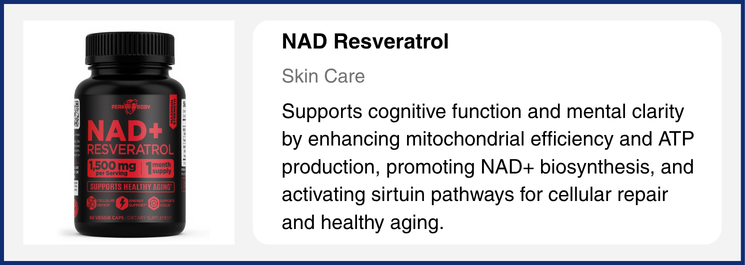
What are NAD+ and Resveratrol?
NAD+ (nicotinamide adenine dinucleotide) is a coenzyme present in every cell in your body. It drives cellular energy production, supports DNA repair, and helps regulate proteins called sirtuins that are closely tied to aging processes.
The problem is that NAD+ levels drop steadily as you get older, and that decline is a real and measurable phenomenon that has attracted serious scientific attention.
Resveratrol is a polyphenol found in red wine, grapes, and certain berries. It activates some of the same sirtuin pathways as NAD+ and is frequently combined with NAD+ precursors like NMN (nicotinamide mononucleotide) in longevity supplements.
Animal studies have shown that taking them together raises NAD+ levels in heart and skeletal muscle more effectively than NMN alone.
What the Research Shows
NMN: The foundational science here is solid, and human data is building. NMN supplementation has been shown to measurably raise blood NAD+ levels in humans. A 250 mg/day of NMN over 12 weeks has been associated with improved walking speed, better sleep quality, and higher blood NAD+ levels compared to placebo.
That’s a meaningful result for anyone thinking about muscle function and physical performance as they age.
Resveratrol: For this ingredient, there’s good evidence for cardiovascular protection. One trial found that 400 mg of resveratrol in healthy participants significantly reduced expression of inflammatory markers associated with atherosclerosis (plaque buildup in the arteries that restricts blood flow).
Where the Evidence Is Still Developing
The broad anti-aging story is real biology, but the human trial data isn’t definitive yet. Part of the reason is because studies have used varying doses and endpoints. NMN data on metabolic markers like blood glucose and lipids has been mixed in generally healthy populations.
The honest read: The muscle function and cardiovascular findings are genuinely promising. The anti-aging claims are scientifically grounded but still accumulating human proof.
Men in their 40s and 50s interested in proactive longevity support are the right candidates for these supplements, as long as expectations track with where the research actually is.
Performance Recovery: Solid Evidence for Active Men
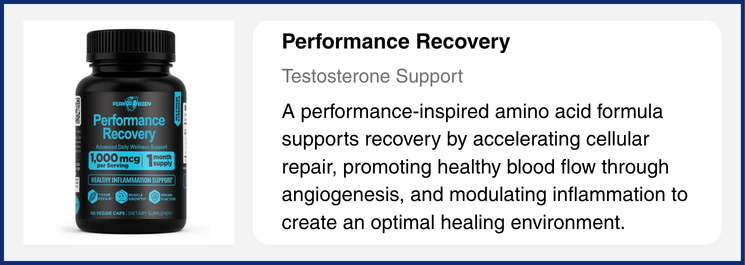
What This Product Targets
Performance Recovery is formulated around curcumin (the active compound in turmeric), Boswellia serrata extract, and supporting anti-inflammatory botanicals. This combination shows up frequently in exercise recovery and joint health research, and for good reason.
What the Research Shows
Curcumin has a well-established clinical track record. A 2025 study found that curcumin — particularly in bioavailability-enhanced formulations like this one — consistently reduced post-exercise muscle damage and inflammatory markers, with measurable improvements in recovery.
For joint health, other studies found that 1,000 mg/day of standardized turmeric extract over 8 to 12 weeks reduced arthritis-related pain and inflammation at levels comparable to ibuprofen and diclofenac in some measures. That’s a significant finding.
The combination with Boswellia serrata strengthens the case further. Combined curcuminoid and boswellia formulations have been found to produce significant improvements in both pain and physical function in people with knee osteoarthritis.
The Benefits of the Bundle
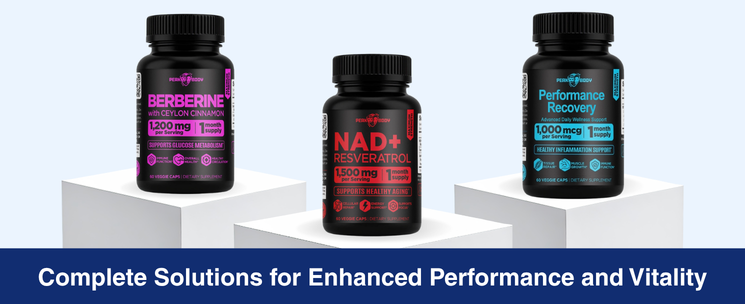
There’s a real reason these supplements are often bundled: Berberine, resveratrol, and curcumin all influence some of the same biological pathways, particularly ones involved in how your cells manage energy and inflammation. They’re not doing identical things, but they’re working in the same general direction.
The Common Target: Your Cellular Energy Switch
The clearest example is a cellular “energy sensor” called AMPK. Think of AMPK as a switch that tells your cells to use fuel more efficiently. It’s closely tied to blood sugar regulation, fat metabolism, and how well your body responds to insulin.
- Berberine activates this switch directly.
- Resveratrol turns it on through a different mechanism.
- Curcumin targets inflammation pathways that interact with that same metabolic machinery.
The NAD+ Connection
Berberine and resveratrol both support a family of proteins called sirtuins, which play a central role in cellular aging and energy regulation. Those are exactly the proteins that NAD+ helps power.
While each product has its own job, they’re reinforcing some of the same underlying systems.
How Each Product Can Improve Your Health
- Berberine tends to show the most direct impact on blood sugar and cholesterol.
- NAD+ with Resveratrol addresses cellular energy and cardiovascular health.
- Performance Recovery handles inflammation and physical recovery.
For men dealing with more than one of these concerns, the three products address different pieces of the same puzzle rather than duplicating each other.
One Honest Note
Most of the research on how these compounds interact comes from studies on the individual ingredients and lab-based pathway research. Clinical trials testing this exact combination are limited. The biological case for pairing them is legitimate; the evidence just isn’t as deep as it is for each product on its own.

Take Control of Your Performance and Vitality with eDrugstore
If you’ve been looking for supplements backed by real research rather than marketing copy, eDrugstore’s Healthy Aging Bundle is worth a close look.
Because these ingredients can affect blood sugar, inflammatory pathways, and cellular metabolism, it’s a good idea to talk with your doctor before starting, especially if you’re already on medication.
Ready to explore the bundle? Visit our men’s health product page. If the bundle is not the right fit for your health goals, you can also purchase these supplements separately.
This article provides general information about health and related topics but is not intended as a substitute for professional medical advice, diagnosis, or treatment. Always seek the advice of your physician or other qualified health provider with any questions you may have regarding a medical condition.
Sources
- Berberine glucose-lowering meta-analysis, 37 RCTs (Frontiers in Pharmacology): https://www.frontiersin.org/journals/pharmacology/articles/10.3389/fphar.2022.1015045/full
- Berberine meta-analysis, glycemic control, umbrella review (PubMed): https://pubmed.ncbi.nlm.nih.gov/38016844/
- Berberine meta-analysis, 50 RCTs with lipid data (PubMed): https://pmc.ncbi.nlm.nih.gov/articles/PMC11617981/
- Berberine subgroup analysis, duration and age effects (PubMed): https://pubmed.ncbi.nlm.nih.gov/30393248/
- NMN and resveratrol synergy in animal models (PMC): https://pmc.ncbi.nlm.nih.gov/articles/PMC9861325/
- NMN trial, older adults, walking and sleep outcomes (Renue by Science): https://renuebyscience.com/pages/a-current-list-of-completed-nmn-human-trials
- Resveratrol anti-inflammatory cardiovascular trial (PMC): https://pmc.ncbi.nlm.nih.gov/articles/PMC8466271/
- Resveratrol clinical trial systematic review (PubMed): https://pmc.ncbi.nlm.nih.gov/articles/PMC10815776/
- NMN meta-analysis, no benefit on glucose/lipids in healthy adults (SciExplor): https://sciexplor.com/articles/Geromedicine.2025.0008
- NAD+ sufficiency in healthy individuals (nad.com): https://www.nad.com/news/nad-and-aging-what-the-latest-research-says
- Curcumin and EIMD narrative review (SAGE Journals, 2025): https://journals.sagepub.com/doi/10.1177/1934578X251383097
- Curcumin for arthritis meta-analysis (PMC): https://pmc.ncbi.nlm.nih.gov/articles/PMC5664031/
- Curcumin and Boswellia for knee OA meta-analysis (PMC): https://pmc.ncbi.nlm.nih.gov/articles/PMC6131088/

Paula Clark worked in the healthcare industry for 17 years before becoming a full-time freelance health and medical writer. Her clients appreciate her ability to convey complex information in terms laypeople can understand. Paula prides herself on the depth and accuracy of her research. Her goal is to add authority to your site in words that will delight both Google and your readers.