


Highlights
- Prostate cancer is a relatively common disease among older men.
- The PSA prostate cancer screening test has a modest accuracy rate.
- EpiSwitch is a new prostate cancer testing method that promises to be more accurate than the PSA.
- Accurate testing allows doctors to detect prostate cancer in its early stages and treat it more effectively.
One out of six to eight men develop prostate cancer during their lifetimes. Doctors can treat prostate cancer with good outcomes when they detect it early. The symptoms of the disease aren’t specific, however. And our traditional prostate cancer screening tests aren’t particularly accurate.
Researchers have recently developed a new, much more accurate, prostate cancer screening test called EpiSwitch Prostate Screening (PSE) blood test.
The Limitations of Traditional PSA Tests
The prostate-specific antigen (PSA) test measures the level of prostate-specific antigen — a protein secreted by the prostate — in the blood. When there’s a cancerous growth in the prostate, PSA levels tend to be high, but they can be elevated for other reasons as well.
High PSA levels only mean doctors should perform further tests to confirm or negate the presence of cancer. But the PSA test is known to be unreliable.
Of four men with elevated PSA levels, three do not have prostate cancer. And out of seven men with prostate cancer, one will have normal PSA levels.
All this adds up to an accuracy of around 55% for PSA-based prostate cancer detection.
Low accuracy means many men undergo unnecessary and invasive procedures following their PSA tests. Worse, some cancer cases escape detection, leading to worse treatment prospects and outcomes. PSA testing also can’t tell the difference between slow- and fast-growing cancers.
EpiSwitch, the new prostate cancer screening test, approaches prostate cancer detection differently — and it works.
What Makes EpiSwitch Different?
EpiSwith is a blood test that looks for five epigenetic biomarkers and combines its findings with PSA results.
What Is an Epigenetic Biomarker?
Our lifestyles, diets, habits, and other behaviors influence how our genes work. Epigenetics is the science that studies how these outside factors impact our genes and the roles they fulfill in our bodies. 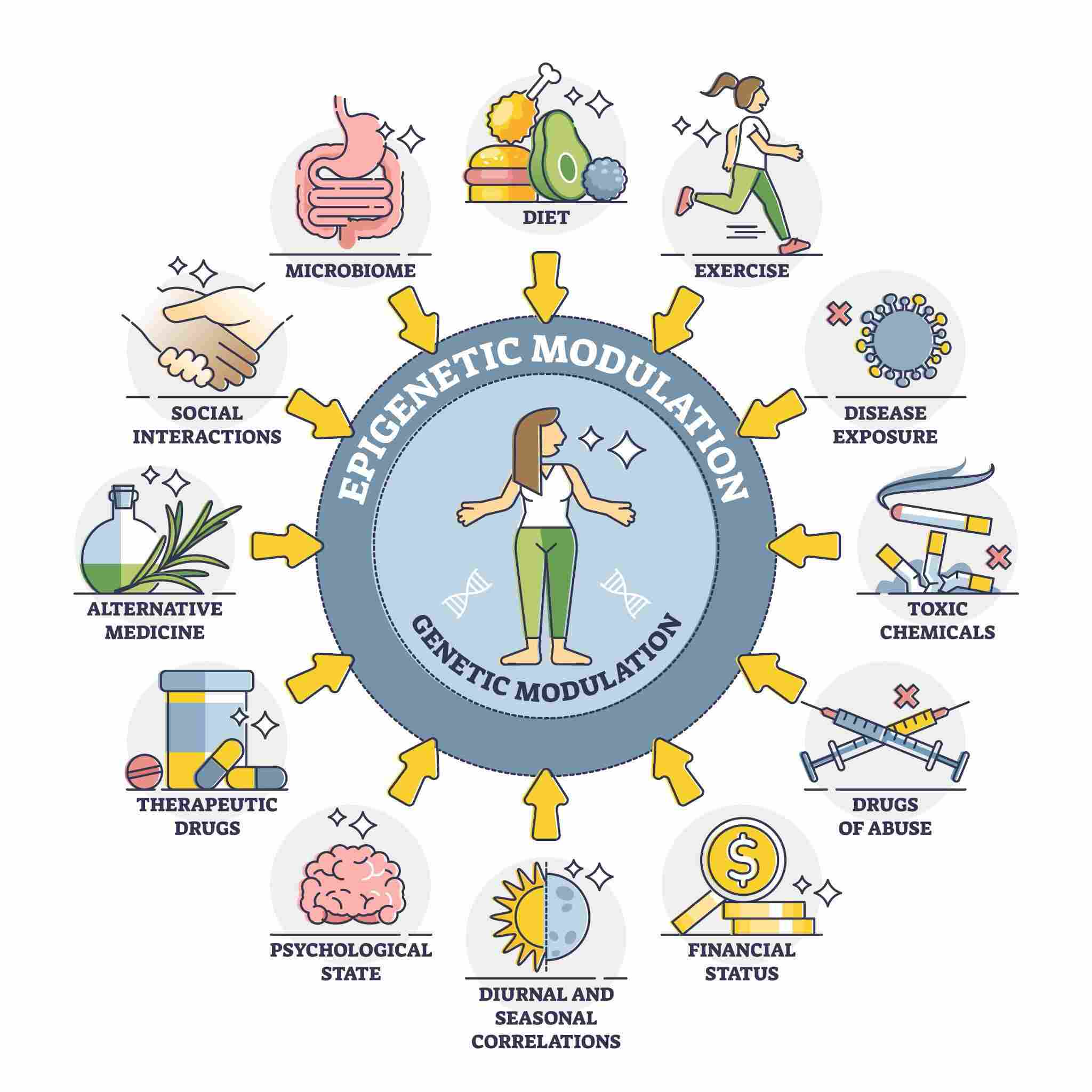
Factors such as whether you smoke or work out, for example, play a role in how often your genes turn “on” and “off.” Scientists can measure this impact through specific biomarkers. They discovered that some biomarkers behave differently when prostate cancer is present.
How Much More Accurate Is EpiSwitch than PSA Alone?
By measuring five epigenetic biomarkers in addition to a PSA test, doctors can improve the accuracy of prostate cancer detection significantly. EpiSwitch improves the predictive accuracy of testing from 55% to 94%.
What Is Predictive Accuracy?
Predictive accuracy tells researchers how often a system they use to predict something is right. When you predict the outcome of four games and get two right, your predictive accuracy is 50%. That is about the accuracy of PSA-based prostate cancer detection.
Of 100 positive PSA test results, 25 patients are eventually diagnosed with prostate cancer. Considering that around 85 of 100 people with low PSA don’t have prostate cancer, we get an accuracy rate of 55%.
By fine-tuning their predictive system through the five epigenetic biomarkers, researchers have improved their predictive accuracy to 94%. That is the equivalent of correctly predicting the results of more than nine games out of ten. Of 100 positive test results, 93 patients turn out to have prostate cancer.
Epigenetic biomarkers can also help doctors predict how patients respond to treatments.
The Importance of High Predictive Accuracy
Medical tests with high predictive accuracy allow doctors to confidently diagnose conditions and treat them more effectively. The benefits of high predictive accuracy in a medical context also include:
- Early disease detection
- Risk reduction and effective prevention
- Optimal resource allocation
- Improved patient confidence
- More effective research and development
- Optimal use of medical procedures and treatments
- Better public health interventions
The early detection of prostate cancer can be life-saving. If doctors catch the disease in its early stages, they have more options to treat it and can expect better outcomes.
The Real-World Impact of EpiSwitch
Accurate prostate cancer detection can increase the number of early diagnoses and successful treatments. The number of unnecessary and invasive prostate biopsies will drop. And fewer people will die as a result of false negative detection results.
PSA testing and the relative uncertainty surrounding it have been associated with negative psychological effects in patients. If your PSA says you may have prostate cancer when you don’t, you go through much unnecessary anguish.
Often, it takes further invasive and stressful testing to confirm or deny the presence of cancer.
Accurate EpiSwitch testing doesn’t just save lives — it also protects people from the psychological effects that waiting for confirmation can cause. It also allows doctors to focus their resources on patients who truly need them.
How to Get the EpiSwitch Test
The EpiSwitch prostate screening blood test has completed clinical validation and is now available in the U.S. 
Getting screened for prostate cancer becomes more and more important as you age. Early detection can mean the difference between life and death, and with EpiSwitch, you don’t have to rely on limited-accuracy testing.
Here’s how you can get an EpiSwitch test.
- Talk to your doctor. Discuss your symptoms, medical history, and lifestyle choices with your doctor and ask about EpiSwitch.
- Understand the procedure. Before going ahead with sample collection, understand the benefits of the EpiSwitch test. PSE is a blood test, so it’s less invasive than a prostate biopsy.
- Collect the sample. The EpiSwitch test requires a blood sample. Your doctor can send you to a lab or can collect the sample in the office.
- Analysis. A specialized lab analyzes your PSA and epigenetic biomarkers to determine whether you have prostate cancer.
- The results. It takes the lab about five days to return your results after it receives your sample.
- Follow-up. Your doctor will receive your results and will contact you about next steps. If your result is positive, they may recommend watchful waiting or starting prostate cancer treatment.
EpiSwitch Prostate Screening Test Saves Lives
EpiSwitch is a game changer in prostate cancer detection and subsequent treatment. It analyzes epigenetic biomarkers to determine whether prostate cancer is present, in addition to PSA testing. Its predictive accuracy is 94% compared to PSA’s 55%.
EpiSwitch helps with early detection, saving lives. It can help avoid false positives that cause unnecessary stress and false negatives that can result in patient deaths. It is a powerful tool in the hands of doctors in their battle against prostate cancer.
Ask your doctor about EpiSwitch if you experience symptoms like erectile dysfunction, difficult urination, blood in your urine, or pain or burning with urination.
Treating Prostate Cancer-Related Erectile Dysfunction
If prostate cancer or treatment is affecting your erectile function, eDrugstore can help. We offer FDA-approved medications, such as Viagra, Cialis, and Levitra, that many men count on for a normal and fulfilling sex life. Visit our erectile dysfunction medication page today to get started.

James West is a seasoned health and wellness writer with a focus on topics related to physiology, sleep, and men’s health. He has contributed articles on a range of subjects, from erectile dysfunction treatments and sleep aids to hair loss, providing well-researched insights to help readers make informed health decisions.