

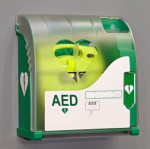
 Over the past few years, defibrillators have been installed in thousands of public places. These portable machines allow everyday people to help someone in need. The machines are used to shock and revive a person whose heart has stopped beating. A new study shows these devices are saving lives.
500+ lives saved
Heart experts at Johns Hopkins and elsewhere have evidence that at least 522 lives can be saved annually in the United States and Canada by the widespread placement of automated external defibrillators, or AEDs.
The laptop sized machines give a Good Samaritan step by step instruction to use them. The study shows patients that were shocked in the field were twice as likely to survive because of the quick action taken.
“Our results were emphatically clear,” says principal investigator, Myron “Mike” L. Weisfeldt, M.D., a cardiologist at The Johns Hopkins University School of Medicine. “Good Samaritans, when given access to automated defibrillators in potentially fatal emergencies, save lives.”
 The need for more AEDs
“This is a serious matter of public health policy and similar to previous discussions about placing fire extinguishers near building exits, wearing seat belts while driving, or manufacturing cars with airbags,” says Weisfeldt, the William Osler Professor of Medicine at Hopkins and past president of the American Heart Association (AHA).
Each device costs about $2,000. In some cases local or state governments have paid to have the AEDs installed, but the cost could be a deterrent for some. In some states, AEDs have become mandated in certain areas, like sports arenas. Weisfeldt believes these kinds of mandates could save lives, and hopes to see more AEDs put in public and private settings.
“Government, community and business leaders need to carefully consider increased access to automated external defibrillators when making healthy public policy.”

We specialize in providing our over 1,000,000 customers with relevant product and condition information created by our professional editorial staff which includes our team of medical writers, medical practitioners, and health educators. eDrugStore.com Staff on Facebook