


Highlights
- Prostaglandin D2 is a compound that may be a new target for hair loss treatments.
- PGD2 is elevated in the balding scalp.
- Scientists believe that by blocking the action of PGD2 on the hair follicle, they can prevent hair loss.
- The search is on for an effective PGD2 inhibitor.
Researchers have recently identified a substance called prostaglandin D2 (PGD2) as a possible culprit in hair loss. They have found that there is much more of this substance in the balding areas of the scalp than in the areas that retain hair. If we learn how to manipulate PGD2 levels, we may be able to cure hair loss.
What is PGD2?
PGD2 and other prostaglandins are lipid mediators that the body produces in significant amounts. Lipid mediators control and regulate many essential bodily functions, such as sleep. They are involved in inflammation, and as luck would have it, hair loss.
The problem is that we don’t know much about how prostaglandins work. We understand some aspects of their activity, and we suspect there is much more going on with them in the body than we know. But we don’t fully understand why PGD2 causes hair loss.
Scientists have found a correlation between hair loss and high local prostaglandin levels in the skin. The theory is that hair follicles have receptors to which PGD2 binds, telling them to stop producing hair. Scientists call this receptor GPR44.
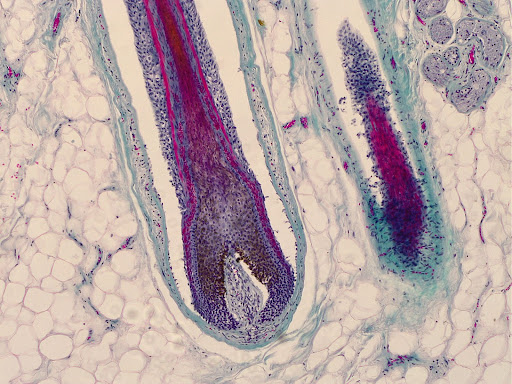
We Still Don’t Understand How or Why Hair Loss Happens
Hair loss can cause anguish for sufferers. It is frustrating from a scientific perspective as well. Despite much progress in understanding how the body functions, hair science has not progressed beyond Aristotle’s observation that “eunuchs don’t go bald.” The fact that eunuchs, as castrated males, don’t lose hair ties hair loss to the male sexual organs and hormones.
Tried-and-true hair loss solutions like Propecia and dutasteride exploit this ancient knowledge about hair loss by blocking male hormones from affecting hair growth. Hair growth is a complex process, however. You can’t just press a button or take a pill and expect it to do as you please.
But by understanding in detail how hair growth works, we could come up with new treatments that may offer definitive solutions to hair loss. We may even figure out how to regrow hair without any side effects.
PGD2 Could Be an Answer
Prostaglandins act in groups, and they often have opposing functions. If one prostaglandin causes inflammation, there are others that alleviate inflammation. (Think of it as one type turning the immune system on and another turning it off.)
There is a balanced relationship between them, and when something upsets this balance, one side gains the upper hand.
In hair growth and loss, PGD2’s opponents are PGE2 and PGF2. While PGD2 promotes hair loss, PGE2 and PGF2 make hair grow.
All we need then is to find a way to stop PGD2 and boost PGE2 and PGF2, right?
The problem is that PGD2 is not a clear-cut bad guy in the body. It plays an essential role in many biochemical processes. You can’t just eliminate it.
Likewise, PGE2 is not a clear-cut good guy. It can promote cancer, for one thing.
Still, the PGD2/PGE2 pathway presents an interesting opportunity for the treatment of hair loss. Biochemistry has not studied lipids as much as it has proteins and genes. It may be the missing link that we need for a breakthrough. And it makes scientific sense.
Why PGD2 Fits the Hair Loss Picture
Several pieces of scientific evidence supports PGD2’s probable role in hair loss. If confirmed, scientists could use this link to develop medications that would cure hair loss.
- PGD2 may explain why minoxidil promotes hair growth. There is some scientific evidence that minoxidil increases PGE2 levels in the scalp, counteracting PGD2.
- The hair follicle has receptors in its outer layers. These receptors may, therefore, be sensitive to higher PGD2 levels in the skin.
- A product exists that promotes hair growth by boosting PGF2. The name of the substance is bimatoprost, and the brand name is Latisse. People use Latisse to boost the growth of their eyelash hair.
- Hormones influence prostaglandin levels. And that could be the missing link between testosterone, DHT, and PGD2. Elevated PGD2 levels in the scalp may be the result of elevated DHT levels in the body.
- PGD2 may be responsible for oily scalp. In many cases, hair loss goes hand-in-hand with a significant increase in scalp oil production. There is some scientific evidence that suggests PGD2 may have a hand in turbo-charging your sebaceous glands.
Could We Cure Hair Loss by Inhibiting PGD2?
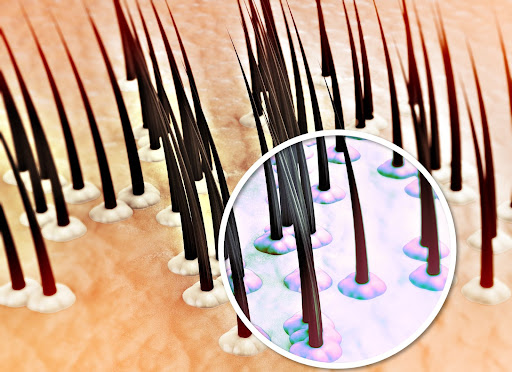
If the PGD2 theories are correct, we could cure hair loss by eliminating the effects of PGD2 on the hair follicle. The key to such a solution is the GPR44 receptor of the hair follicle. If science could find a way to block this receptor, we could curb the effects of PGD2 on hair growth.
Researchers are already working on developing GPR44 inhibitors. This approach raises a couple of questions, however:
- Is hair loss reversible through PGD2 inhibition? Or would we have to start blocking the GPR44 receptor in puberty to prevent damage to the hair? If we can’t regrow hair by inhibiting the action of PGD2, then hair-loss therapies based on this method would be useless for those who have already lost their hair.
- Can science find a reliable and effective GPR44 inhibitor relatively quickly? It may take decades for such a solution to emerge. In that case, hair loss therapies targeting PGD2 are irrelevant for current hair-loss sufferers.
Finding the right solution for PGD2 inhibition is like finding the needle in the proverbial haystack. The skin is home to a diverse range of bioactive lipids. The solution may be as simple as selenium chloride.
If we want to limit unwanted side effects, however, we may be looking for something more complex and elusive.
Until scientists find that PGD2 needle, we have a range of proven hair-loss treatments we can use. Propecia (generic name finasteride) has proven effective with almost no side effects. Propecia (brand-name finasteride) is the only FDA-approved pill that can stop your hair loss and help you regrow hair.
eDrugstore Can Help
We carry Propecia and finasteride, the only hair restoration solutions that can slow your hair loss and help you recover some of your tresses.
Our U.S.-licensed physicians can help you determine whether Propecia/finasteride is the right treatment for you. With eDrugstore, you can order your Propecia and have it sent to your home quickly and discreetly. Virtual health visits and shipping are always free.

James West is a seasoned health and wellness writer with a focus on topics related to physiology, sleep, and men’s health. He has contributed articles on a range of subjects, from erectile dysfunction treatments and sleep aids to hair loss, providing well-researched insights to help readers make informed health decisions.