

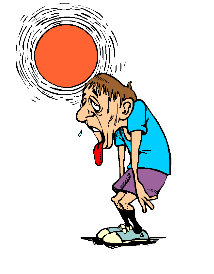
 The ability to steer clear of heat exhaustion and heat stroke is rooted in common sense: drink plenty of water and stay out of the sun for extended periods. This sounds easy enough to do, but every summer, tens of thousands of people run into heat-related problems.
Even if you don’t fall victim to heat exhaustion or its life-threatening extension, heat stroke, you might encounter someone who does. Therefore, it can’t hurt to learn the difference between the two so that you can act accordingly.
Heat exhaustion is not as serious as heat stroke, yet it requires immediate attention so that the condition does not progress to heat stroke. Heat exhaustion is a debilitating condition in which a person sweats heavily and becomes tired or weak because their body is losing fluids too rapidly. They may appear pale and their skin may be cool and moist. They are prone to muscle cramps, dizziness and fainting, nausea, as well as headaches and vomiting. They may have a fast, weak pulse and experience fast and shallow breathing.
If a person appears to be struggling with heat exhaustion, move them to an air-conditioned place immediately and provide them with water or Gatorade/electrolytes. Once stabilized, they should take a cool shower and continue to rest until fully recovered. If symptoms worsen or fail to improve in a timely manner, call for medical assistance.
The difference between heat exhaustion and heat stroke is that the body begins to shut down its temperature control system, and perhaps more, so immediate attention is necessary. If you see and feel that a person’s body temperature is extremely high and that they have red, hot, dry skin, they may be suffering from heat stroke. Other signs include a rapid, strong pulse, extreme headache, dizziness, nausea, confusion or unconsciousness.
 Call 911 immediately if you suspect a person is suffering from heat stroke, which can cause brain damage and even death. The best course of action is to get the person to an air-conditioned place and cool them down with cool water through a hose or with a sponge.
Due to the record heat waves experienced in many parts of the country this summer, it is vital that those susceptible to heat issues (such as the elderly and those with high blood pressure) take precautions such as eating small meals several times per day. Even healthy people must use common sense measures and not push their limits outdoors. People should also be mindful of animals, who can also suffer heat-related injuries.

We specialize in providing our over 1,000,000 customers with relevant product and condition information created by our professional editorial staff which includes our team of medical writers, medical practitioners, and health educators. eDrugStore.com Staff on Facebook