

- TABLE OF CONTENTS
- Introduction
- What Is Sickle Cell Disease?
- Demographics of the Disease
- What Are Its Symptoms?
- What Is Priapism and RIP?
- Johns Hopkins Study
- Current Treatments Evaluated
- Could Viagra Help?
- Stay on Top of Latest News
Introduction
Men who suffer from sickle cell disease (SCD) face a sharply higher risk of developing erectile dysfunction than men who aren’t afflicted with this blood disorder, according to researchers from Johns Hopkins University.
While the single biggest cause of ED is insufficient blood flow to the penis, the problem among men with sickle cell disease occurs when penile tissue is damaged as a result of repeated episodes of recurrent ischemic priapism, or RIP. The latter is a long-lasting, nonsexual erection caused by blood that is trapped within the spongy erectile tissue of the penis. Left untreated it can permanently damage the delicate tissues of the penis.
Although sickle cell disease has no cure and can significantly shorten the lifespan of those who have it, doctors can prescribe medications and measures to minimize the damage it can cause.
What Is Sickle Cell Disease?
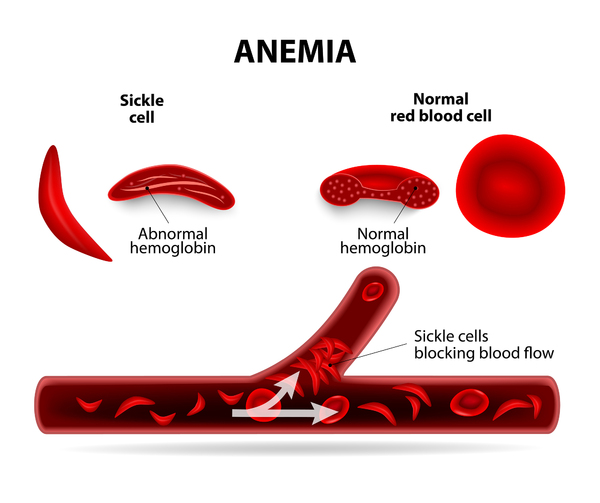
A genetic blood disorder, sickle cell disease is a form of anemia in which the body lacks a sufficient number of normal red blood cells to carry life-sustaining oxygen to tissues and organs throughout the body.
According to MayoClinic.org, normal red blood cells are round and flexible, making it easy for them to flow through the body’s blood vessels. In those with sickle cell disease, the red blood cells are sticky and rigid. The disease gets its name from the crescent- or sickle-shaped appearance of red blood cells in those with the disorder. Because of their irregular shape, these red blood cells sometimes get stuck in smaller blood vessels, which reduces blood flow to certain parts of the body, resulting in pain.
As previously noted, there is no cure for SCD, but doctors can prescribe treatments that relieve the pain associated with acute episodes and prevent or minimize at least some of the complications that SCD can cause.
Demographics of the Disease
The Centers for Disease Control and Prevention says that millions of people worldwide suffer from SCD. The blood disorder is most common among those whose ancestry can be traced to sub-Saharan Africa, Spanish-speaking countries of the Americas, Greece, India, Italy, Saudi Arabia, and Turkey.
In the United States, it is estimated that roughly 100,000 Americans suffer from SCD. The agency says that SCD will be diagnosed in about one in every 365 African-American or black births and one in every 16,300 Hispanic-American births. Roughly one in every 13 African-American or black babies born carries the sickle cell trait, meaning that the child inherits the sickle-cell gene but doesn’t suffer from SCD itself.
What Are Its Symptoms?
Childen with sickle cell disease are born with it, although it rarely becomes symptomatic until the child reaches the age of 5 or 6, according to the National Heart, Lung, and Blood Institute. Under current states’ laws, every child born in the United States must be screened for the disease, which allows parents to be on the lookout for symptoms, which can include:
- A yellowish cast to the skin, known scientifically as jaundice, or a yellowing seen in the whites of the eyes, which is known as icteris.
- Painful swelling of the hands or feet.
- Fatigue or fussiness.
Episodes of acute pain are the most characteristic symptom of the disease as it continues to damage the patient’s vascular system. Although this type of pain can hit any part of the body, it is most frequently seen in the abdomen, arms, chest, legs, and lower back, according to the institute.

What Is Priapism and RIP?
The link between sickle cell anemia and ED has to do with the former’s increased incidence of priapism in male SCD patients. Priapism is usually defined as a spotaneous, nonsexual erection that lasts for four hours or more. Regardless of its cause, priapism is a medical emergency, and if you believe you are suffering from such an episode, seek medical attention immediately.
In male SCD patients, priapism often occurs on an intermittent basis and may not necessarily last as long as four hours or more. These episodes tend to be somewhat shorter in length the more frequently they occur. However, if you have SCD and are experiencing frequent long-lasting erections in the absence of physical stimulation or sexual desire, it is important that you see your doctor promptly. This form of priapism is known as recurrent ischemic priapism, or RIP. The heightened blood pressure associated with episodes of RIP can inflict serious and sometimes permanent damage to penile tissue, which can result in a permanent inability to get and keep an erection.
Johns Hopkins Study
RIP can affect men who don’t suffer from sickle cell disease, but it is less likely to cause erectile dysfunction in such cases, according to the findings of a Johns Hopkins study.
In fact, the urologists who conducted the Johns Hopkins study found that male SCD patients who experienced episodes of RIP were five times more likely to develop ED than those non-SCD patients who also suffered from RIP. The results of the study were published in the March 2015 issue of “The Journal of Sexual Medicine.”
Current Treatments Evaluated
A team of British urologists conducted a review of relevant scientific literature to evaluate the benefits and risks of existing treatments for priapism in boys and men with SCD. They published their findings in the September 2017 issue of the “Cochrane Database of Systematic Reviews.”
Researchers identified three relevant studies. The first compared the effects of treatment with silbestrol, a powerful synthetic estrogen, with placebo, while the second assessed the effects of sildenafil, Viagra’s active agreement, versus placebo. The third compared the effects of ephedrine, a nervous system stimulant, with those of placebo.
The review looked specifically for treatments that triggered detumescence, or loss of erection, and those that reduced the frequency of priapism events. None of the studies they reviewed addressed the first criterion, while all three looked at the effects of the treatments on frequency of episodes. However, none of the treatments seemed to significantly outperform placebo.
In conclusion, the researchers said their review had “clearly identified the need for well-designed, adequately-powered, multicenter randomised controlled trials assessing the effectiveness of specific interventions for priapism in sickle cell disease.”
Could Viagra Help?
Extensive clinical trials have shown that Viagra and other PDE5 inhibitors are both safe and effective in treating blood flow-related ED in otherwise health men. However, a rare side effect of these oral ED drugs can be priapism, a complication commonly associated with sickle cell anemia. For this reason, patients with SCD should consult their doctor before using Viagra or any of the other PDE5 inhibitors.
It should be noted that the National Institutes of Health in 2009 halted a trial of sildenafil as a treatment for pulmonary hypertension in sickle cell patients primarily because it was triggering episodes of priapism.
Stay on Top of Latest News
The blog at eDrugstore.com carries news about the latest developments on the consumer health front, particularly reports specific to sexual health and function. If you’d like to stay abreast of these developments, follow the blog.

We specialize in providing our over 1,000,000 customers with relevant product and condition information created by our professional editorial staff which includes our team of medical writers, medical practitioners, and health educators. eDrugStore.com Staff on Facebook