

Telemedicine can also be beneficial for patients in many more locations when they’re in a situation where time is critical. Stroke and brain aneurysm patients need medical attention quickly, and transferring a patient to a location where specialists are available isn’t always time-efficient. Telemedicine is helping by allowing specialist consultations to emergency departments that need a specialist’s expertise and need it quickly, like in cases of brain aneurysm.
What Are Brain Aneurysms?
According to the Mayo Clinic, a brain aneurysm is a ballooning, or bulge in a blood vessel in the brain. On diagnostic images they may look like a berry hanging from a stem. When a brain aneurysm leaks or ruptures, it bleeds into the brain. Brain aneurysms often rupture into the space between the brain and the tissues that cover it. When this happens, the situation is life-threatening and requires immediate medical attention.
Many brain aneurysms do not rupture, and don’t cause any symptoms. These are often discovered by accident, when a physician tests for other conditions. Sometimes doctors treat un-ruptured brain aneurysms to prevent a rupture. In some cases, however, an aneurysm remains undetected until it ruptures, and quick action is needed. In 1999, a young girl named Marisa (Missy) Magel had an undetected brain aneurysm and died at summer camp when she was only 12 years old.
The Missy Project
Missy’s family and friends established The Missy Project on November 24, 1999, which would have been Missy’s 13th birthday. Missy’s family researched brain aneurysm disease and found that it is not as rare as many people think, even in children. The disease is often misdiagnosed as migraine headaches.
Each year, the total number of deaths from brain aneurysm ruptures is approximately equal to the number of deaths from prostate cancer, yet funding for research on the condition lags behind. In May of this year, The Missy Project donated $150,000 to the Dartmouth-Hitchcock Center for Telehealth in New Hampshire. This medical center is working on using telemedicine to give brain aneurysm patients – regardless of age – real-time access to specialty care.
The doctors at Dartmouth-Hitchcock say that telemedicine is particularly well-suited to neurovascular patients like those with brain aneurysms, because a physical, in-person examination is typically not necessary. People diagnosed with un-ruptured brain aneurysms may wait weeks and drive long distances for a 15-minute appointment, and telemedicine like that practiced by the physicians at Dartmouth-Hitchcock lets patients replace this process with a telemedicine conference using a computer or mobile device, and if an in-person visit is necessary, one can be scheduled. Telemedicine has already been shown to be effective for patients taken to emergency departments with ruptured brain aneurysms.
Telemedicine Saves Suzanne Singh’s Life
Pennsylvanian Suzanne Singh was taken to the emergency department at Lansdale Hospital after experiencing sudden vision problems, which indicated the possibility of an aneurysm pressing on her brain. This was confirmed when her physician at Lansdale ordered a CT scan. Afterward, physicians at Lansdale used a telemedicine connection to reach specialists at Abingdon Health Neurosciences Institute.
At Abingdon, Dr. Quaisar A. Shah, director of Neurointerventional and Neurocritcal Care Services viewed her CT scans on a secure laptop and saw that the aneurysm had ruptured and was leaking into the space between her brain and the membrane covering it. He realized Suzanne needed to be transported immediately to Abingdon Memorial Hospital, where neurocritical care specialists would be standing by. Once there, Singh was stabilized, and excess fluid was drained from around her brain. Later, a catheter was directed to the location of the aneurysm, where tiny coils were placed to seal off the aneurysm. After 11 days in the hospital, Singh was discharged with no signs of complications.
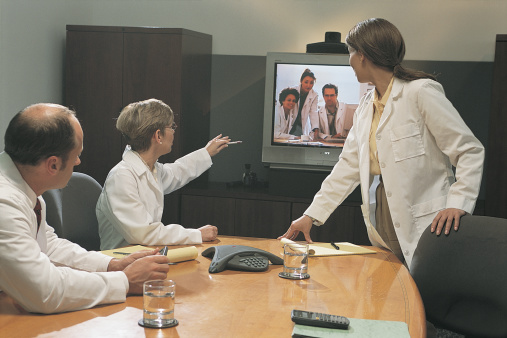
With secure videoconferencing technology, telemedicine lets neurologists, neurosurgeons, and other neurointerventionalists take care of several steps in caring for these patients, like
- Consulting with emergency physicians at the hospital where the patient first arrives
- Speaking with the patient if possible, or with the family
- Examining the patient
- Reviewing medical history and lab reports
- Viewing radiology images
Then, the specialists and emergency room physicians make a decision as to whether local care is appropriate, or whether the patient needs to be transferred for more advanced treatment.
Neurology specialists throughout the country are researching the role telemedicine can play in events like brain aneurysms and strokes. The UCLA Brain Aneurysm and AVM (Arteriovenous Malformations) Program, under the direction of Neil A. Martin, is a worldwide leader in treatment of vascular diseases of the brain, including aneurysms. This program is able to help large numbers of patients working with other medical centers, sometimes with the aid of telemedicine.
The facilities at the UCLA Brain Aneurysm and AVM Program are state-of-the-art, and include advanced neurosurgical operating rooms, a computerized neurosurgical intensive care unit with continuous brain activity and cerebral blood flow monitoring, radiosurgery facilities, specialized neuro-endovascular suites, and advanced telemedicine capabilities. Without telemedicine, the program would not be able to provide as many patients with the life-saving treatment they need for brain aneurysms.
The Many Lifesaving Uses of Telemedicine
Telemedicine can take some of the guesswork out of medical care in critical situations like ruptured brain aneurysms, and can help doctors make more informed decisions about whether patients should be transferred to specialty care facilities or whether they can be treated locally. But telemedicine has many uses outside critical emergency situations.
Around half of emergency room visits aren’t actual emergencies, and telemedicine gives patients an easier, more cost-effective, less stressful alternative when they are sick or injured outside normal physician office hours. When people experience emergencies that may require specialist care, telemedicine can help prevent unnecessary transfers, saving significant costs for the patient, the emergency department, and specialist hospitals.
A study in the state of Florida determined that expanded telemedicine could save billions every year on healthcare costs. If telemedicine were to prevent only 10% of hospitalizations in Florida through preventative and maintenance treatments, the state could realize $12 billion in annual cost savings. If telemedicine were to reduce emergency room visits that don’t result in hospital admission by 10%, the state could save over $2.7 billion per year. Nationwide, the numbers would be even more impressive.
At eDrugstore.com, we’re excited about the many positive changes telemedicine promises. eDrugstore.com provides a range of prescription lifestyle medications dispensed in partnership with US-licensed pharmacists, quickly and conveniently. eDrugstore.com is HIPAA-compliant and dedicated to an outstanding customer experience with every order.

We specialize in providing our over 1,000,000 customers with relevant product and condition information created by our professional editorial staff which includes our team of medical writers, medical practitioners, and health educators. eDrugStore.com Staff on Facebook