

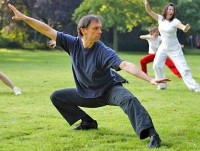
 Tai chi is a martial art based on meditation and self control. It encompasses realms of yoga type movements along with the teaching of mental awareness and meditation. For thousands of years, people have felt that this type of training was beneficial to health and created a soundness of mind. Recent studies by the Harvard Medical School have produced data that prove this is not just a hope, but a reality.
Tai chi is a beautiful ancient art of body and mind enhancement. It is based on physical movements that stretch out the limbs, control breathing, and require extreme concentration. Although this exercise is common in Asian cultures, it is not as well known in the US and is sometimes regarded as a “New Age” practice. Recent studies have shown once again that knowledge of our history is the key to the future.
In the past, patients with chronic systolic heart failure were not allowed to do any sort of strenuous exercise. Up through the 1980’s patients with heart problems were advised to avoid physical activity, and health improvements were targeted on diet and behavioral modifications. Until now, the benefits of Tai chi have not been thoroughly studied by a medical group, especially in the case of heart failure patients.
Scientists at Harvard and Beth Israel Deaconess Medical Center followed 100 outpatients who had reduced heart-pumping function (“systolic heart failure”) and put them into two random groups of 50. One group took part in a 12-week tai chi-based exercise program, and the other group received time-matched education sessions. Both groups attended their sessions twice per week and were similar in terms of baseline demographics, severity of heart disease, and rates of other medical conditions.
Tai chi is often described as “meditation in motion,” but it might well be called “medication in motion.” There is growing evidence that this mind-body practice, which originated in China as a martial art, has value in treating or preventing many health problems. You can get started even if you aren’t in top shape or the best of health.
“A growing body of carefully conducted research is building a compelling case for tai chi as an adjunct to standard medical treatment for the prevention and rehabilitation of many conditions commonly associated with age,” says Peter M. Wayne, assistant professor of medicine at Harvard Medical School and director of the Tai Chi and Mind-Body Research Program at Harvard Medical School’s Osher Research Center. An adjunct therapy is one that’s used together with primary medical treatments, either to address a disease itself or its primary symptoms, or, more generally, to improve a patient’s functioning and quality of life.
The benefits of tai chi are more noticeable if you begin practicing the art before you develop any sort of illness or functional limitations. Tai chi is very safe, inexpensive, and requires no special equipment to get started…so why not give it a try?

We specialize in providing our over 1,000,000 customers with relevant product and condition information created by our professional editorial staff which includes our team of medical writers, medical practitioners, and health educators. eDrugStore.com Staff on Facebook