


Pressure on the sciatic nerve can lead not only to back pain but also to sexual dysfunction in both men and women. Corrective procedures can help to restore function that’s been lost.
As if the back and leg pain of sciatica weren’t troublesome enough in themselves, evidence is emerging that this particularly insidious type of back pain can also lead to sexual dysfunction.
In men, this usually appears in the form of erectile dysfunction, while in women it leads to a loss of sensation in the genitourinary tract that can lead to fecal/urinary incontinence and a declining interest in sex.
For those unfamiliar with sciatica, it is an inflammatory condition caused by pressure on the sciatic nerves that emerge from the spinal column near the base of the lumbar region and the top of the sacrum. You have a sciatic nerve on both sides of your body.
These nerves can become pinched when the discs that separate the vertebrae of the spine degenerate, thus sharply reducing the gap and putting undue pressure on the nerves and blood vessels in the area.
Where Pain Travels
Most often, a pinched sciatic nerve causes pain that is centered in the buttock and gradually radiates down the leg to the foot. In some cases, the pressure on the nerve is so extreme that it leads to a loss of sensation in the lower trunk of the body.
Yet even those fortunate individuals who somehow escape the back and leg pain typical of sciatica can experience sexual and sphincter dysfunction that leads to a decline in their quality of life. A small-scale Turkish study looked at four patients — two men and two women — who all suffered from some degree of herniation in the disc between L5, the bottom-most lumbar vertebra, and S1, the top vertebra of the sacral spine. The study, conducted by researchers associated with Turkey’s Recep Tayyip Erdogan University, was published in the October-December 2014 issue of the “Journal of Craniovertebral Junction & Spine.”
While MRI imaging showed that both male patients and one of the females had significant herniation of the L5-S1 disc, the other female’s disc herniation at the same vertebral junction was less extreme.
Male Patients in Mid-50s
Both male patients were in their mid-50s. Although neither reported back pain, they both had difficulty passing urine and were suffering from acute retention of urine. They both reportedly were suffering from sexual dysfunction, specifically an inability to achieve and sustain an erection. Male 1 had an absence of ankle reflexes and was suffering from a loss of sensation on the surface of the skin in the area of the disc herniation. Reparative surgery reduced the pressure on the nerves in the affected area of the lower spine. However, the patient’s recovery was slow and uneven. Eight weeks after the surgery, he had recovered bladder control, but it took six months before normal bladder function was completely restored. Even two years after the spinal surgery, neither sexual function nor tendon reflexes had returned to normal.
In addition to sexual dysfunction and acute retention of urine, Male 2 was suffering from a loss of anal tone and saddle anesthesia, a loss of sensation in the area of the buttocks, perineum, and inner thighs. After corrective spinal surgery, the patient was able to pass urine after two months, but he didn’t recover normal bladder function until six months after the procedure. One year after surgery, he regained relatively normal erectile function.
Female Patients Much Younger
Of the two female patients tracked in the Turkish study, Female 1, aged 29, was admitted to the hospital complaining of sexual dysfunction, occasional difficulty in passing urine, and perianal numbness and tingling. The patient, who had a prolapse on the left side of the L5-S1 disc space, also had no Achilles reflexes. Three months after surgical removal of the patient’s disc prolapse, bladder control returned and perianal numbness and tingling resolved. However, she had not yet regained normal sexual function at that point.
Although her MRI showed that Female 2, aged 31, had herniation on the left side of the L5-S1 disc, it was not prolapsed but merely bulging. The patient’s major complaints were urinary retention and sexual dysfunction. After conservative surgery to minimize effects from the disc herniation, the patient was discharged. At six months after surgery, bladder function had returned to near normal. However, she continued to experience sexual dysfunction and a loss of sensation in the sacral area.
Pain Isn’t Sciatica’s Only Effect
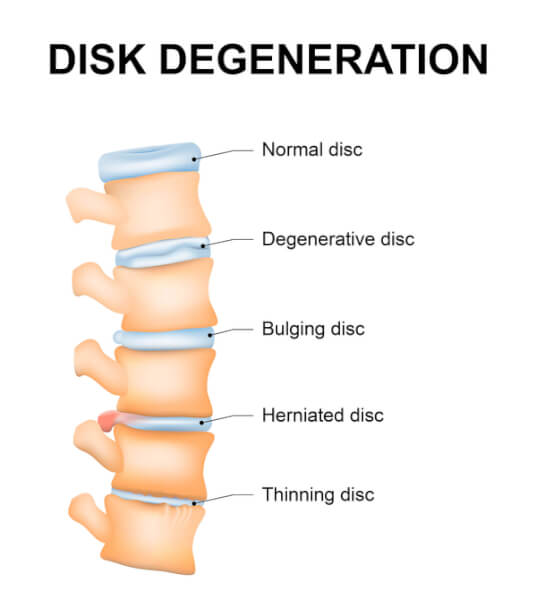
The Turkish study illustrates that even those who have escaped the typical pain of sciatica can experience negative effects, including sexual dysfunction, of herniated discs and the resulting pressure on the sciatic nerve. For those who endure the inflammation and pain of sciatica but with no direct impact on sexual function, the discomfort of the condition alone is enough to discourage any thoughts of sexual activity.
Sciatica, of course, is only one very specific form of low back pain, one that tends to affect not just the back but the legs as well, at least on one side of the body. However, other types of back pain caused by herniated discs are also associated with an increased risk of erectile dysfunction.
Singaporean Study Reviews ED Cases
A Singaporean study, published in the April 20, 2012, issue of “Spine,” looked at the incidence of erectile dysfunction among men under 50 suffering from lumbar spine disorders unrelated to fracture. The researchers, all associated with Singapore General Hospital’s Department of Orthopedic Surgery, reviewed the cases of all lumbar spine surgery patients, under 50, who underwent surgery between June 2006 and November 2007. Excluded from their review were any patients with other risk factors for ED.
The study group totaled 61 spinal surgery patients with a mean age of 38.4 years. The incidence of ED among these young men was 34.3 percent. Patients were tracked for several months after their surgeries, and although improvements were noted in terms of back and leg pain and neurogenic symptoms, little to no improvement was observed in erectile function.
Viagra Can Ease Sciatic Pain
Viagra and the other ED medications called PDE5 inhibitors are best known for their ability to temporarily restore relatively normal erectile function in men suffering from impotence caused by insufficient blood flow to the penis. Some studies have shown that this temporary increase in blood flow can also help to relieve the discomfort of sciatica by increasing blood flow to the nerve.
The PDE5 inhibitors can also help men suffering from ED related to low back pain to get and keep an erection hard and long-lasting enough for sexual intercourse.
To purchase any of these medications in the United States, you will need a prescription. If your doctor has already given you a script for Viagra or another of these drugs, you can get it filled at your local pharmacy or order it from a trustworthy online supplier, such as eDrugstore.com.
If the convenience of an online transaction appeals to you, you can fax your doctor’s prescription or scan and email it along with your order. If you don’t have a prescription, eDrugstore can arrange a complimentary online consultation with one of its team of licensed U.S. physicians.
If you are determined to be an appropriate candidate for the drug, based on your symptoms, overall health, and other medications you’re taking, a prescription will be authorized. To get the process started, click below to access eDrugstore’s Erection Problems page. There you will find additional information about ED and the medications available to treat it.

We specialize in providing our over 1,000,000 customers with relevant product and condition information created by our professional editorial staff which includes our team of medical writers, medical practitioners, and health educators. eDrugStore.com Staff on Facebook