

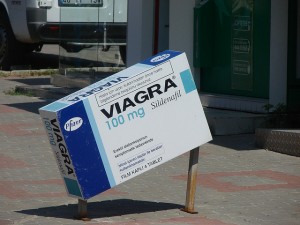
The price of Viagra — in both its brand-name and generic formulations — is falling in markets around the world. Triggering the free fall in prices for this popular impotence drug has been the expiration in many countries of Pfizer’s patent, which previously gave the company exclusive rights to market the impotence medication.
Pfizer’s South Korean patent on Viagra expired in May 2012, opening that lucrative market to generic versions of the drug.
Canadian Patent Lost
After a protracted series of court battles in Canada, that country’s highest court invalidated Pfizer’s patent on Viagra in April 2013, clearing the way for more competition from manufacturers of generic sildenafil citrate.
In Europe, Pfizer’s patent for Viagra expired in mid-2013 in 11 of the continent’s biggest markets, including Austria, Denmark, France, Germany, Ireland, Italy, Netherlands, Spain, Sweden, Switzerland, and United Kingdom.
Australian Patent Expires
Pfizer’s Viagra patent in Australia expired in mid-May 2014, opening the door to stiff competition from generic manufacturers.
In some countries where patent enforcement is either weak or nonexistent, Viagra has had to compete for years with generic versions of its breakthrough ED drug. Such countries include China, Egypt, and India.
The fierce competition between Pfizer’s version of the drug and its generic formulations has driven prices to unprecedented lows, which has suddenly made the impotence medication affordable to a whole new market demographic.
UK Prices Drop Sharply
In the United Kingdom, the drop in prices for Viagra was pretty dramatic. The “Daily Mirror” reported in January 2014 that the average price for Viagra had dropped from roughly US$35 for four tablets to about US$2.40.
This precipitous decline in Viagra prices in the U.K. is expected to double or even triple the number of the drug’s users in that country. As of early 2014, the number of regular Viagra users in Great Britain was estimated at 750,000. Health authorities believe that about 2.3 million men in the United Kingdom suffer from erectile dysfunction.
Viagra Cheaper in Australia
In Australia, the price for four 100-milligram tablets, as of end-July 2014, ranged from US$13 to US$14, down sharply from the US$61 to US$80 range that prevailed before Pfizer’s patent expired.

A U.S. federal judge ruled that Pfizer’s American patent for Viagra would remain in effect until April 2020. However, the ruling represents a compromise with Teva Pharmaceuticals, which will be permitted to begin marketing a generic formulation of Viagra beginning in late 2017. Under the terms of the decision, Teva will pay Pfizer a royalty for a license to produce its generic version of the drug.
Although the court-approved compromise with Teva will help Pfizer to continue to reap significant U.S. profits from its little blue pill for the foreseeable future, it’s likely that the competition-driven price battles now raging in other world markets will eventually reach American shores.
Factors Affecting US Outlook
The 2020 expiration of Pfizer’s Viagra patent and the 2017 introduction of Teva’s generic Viagra formulation are just two of the many factors that are likely to shape the U.S. market for impotence drugs over the next several years.
Pfizer’s Viagra, first marketed in the United States in 1998, was the first of the new wave of medications that have dramatically transformed the treatment of impotence in America and elsewhere around the globe. In order of their approval by the U.S. Food and Drug Administration, these ED drugs are Levitra, Cialis, Staxyn, and Stendra.
Collectively, these drugs are known as PDE5 inhibitors, so-called because they temporarily block the effects of an enzyme known as phosphodiesterase type 5. To fully understand how these drugs work, it’s helpful to know a little bit about the mechanics of the erectile system.
Erectile Process Explained
The erectile process usually begins in the brain when feelings of sexual desire trigger the release of nitric oxide, which in turn causes an expansion of the erectile tissue in the penis through an accumulation of a substance known as cyclic guanosine monophosphate, or cGMP. The PDE5 enzyme, left to do its normal thing, breaks down cGMP, thus making it more difficult for an erection to be achieved.

By temporarily disabling the PDE5 enzyme, the current crop of impotence drugs facilitates the erectile process. As a result of using these drugs, many men who were previously unable to achieve and maintain erections strong enough for intercourse are now able to resume relatively normal sex lives.
Drugs Vary from One Another
Although all of the PDE5 inhibitors available in the United States are very similar in the way they work, each has its own unique chemical structure. Because of this, one man may find that Viagra works best for him and causes few, if any, side effects, while another may opt for Cialis for the very same reasons.
Over the next decade or so, the companies that manufacture and market each of the PDE5 inhibiting medications in the U.S. market will eventually lose their patents, which will open the door to generic formulations of these drugs. In view of these developments, the long-term outlook is for lower prices overall for impotence drugs, which will then be available to a far wider audience than can currently afford to use them.
Cialis Going OTC?
Adding a further wrinkle to the current outlook for the impotence drug market in the United States is the proposal to market an over-the-counter version of Cialis beginning in 2018.
Under the terms of the proposal, which has not yet won approval from the FDA, French drug maker Sanofi would market the nonprescription version of the drug in all markets for which it has been approved. Eli Lilly & Company, the patent holder for Cialis, would manufacture the OTC formulation of the drug in the same Puerto Rican facility where prescription Cialis is currently produced.
The proposed 2018 introduction date for Cialis OTC coincides with the expiration of Lilly’s patent for Cialis. Thus, the licensing agreement with Sanofi would allow Lilly to still realize significant profits from the drug.
Prescriptions Still Necessary
For the next few years anyway, American men will need a prescription to buy Viagra or any of the other PDE5 inhibitors.
If you’re looking for a reliable online source for any of these impotence drugs, eDrugstore is an excellent choice. It is one of a network of online drugstores operated by Secure Medical, which is headquartered in Tempe, Arizona. All medications sold through eDrugstore are FDA-approved and are supplied through U.S. licensed pharmacies
If you have a prescription from your doctor, you can fax or scan and email it to eDrugstore along with your order. Alternatively, you can have an online consultation with one of eDrugstore’s contract physicians at no additional cost. You’ll be required to fill out an online questionnaire covering your medical history and reasons for wanting to buy an ED drug. eDrugstore’s doctor will review your history and write a prescription if he or she determines that it’s appropriate.
Don Amerman is a freelance author who writes extensively about a wide array of nutrition and health-related topics.
Photo credit: kh1234567890

We specialize in providing our over 1,000,000 customers with relevant product and condition information created by our professional editorial staff which includes our team of medical writers, medical practitioners, and health educators. eDrugStore.com Staff on Facebook