

The last time humans and Neanderthals had sex was as recently as 47,000 years ago, according to new research. — Click to Tweet.
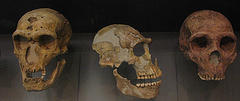
Neanderthals, it appears, stopped cross-breeding with humans shortly after we migrated out of Africa. These closely-related human ancestors shared the globe with us for most of our history, but only recently did we realize that we may have shared more than just the globe.
When we appeared about 200,000 years ago, they’d already been around for about 30,000 years. And coincidentally, they disappeared about 30,000 years ago. So our lifespans as primate species have actually overlapped for most of our existence.
DNA Research
These new findings appeared after scientists completed the first sequence of the Neanderthal genome in 2010. They used DNA extracted from fossils, and eventually discovered that Neanderthals and humans occasionally interbred.
In fact, most modern Eurasians have a genome that consists of one-to-four percent Neanderthal DNA. There is speculation as to what kind of traits this interbreeding might have endowed us with; some scientists suggest we may have been given stronger, more robust immune systems.
A European Thing?
Studies of the Neanderthal genome reveal that Africans have the least amount of genetic material in common with Neanderthals.
The most likely explanation is that Neanderthal interbreeding began about 100,000 years ago after the modern lineage of humans appeared outside of Africa. In this case, most of the interbreeding would have occurred in pockets of Europe between 86,000 and 37,000 years ago, with a likelihood that 65,000 to 47,000 years age was the period of the most intense interbreeding.
A Paleolithic Practice
The Upper Paleolithic is the name for the time period when much of this interbreeding occurred. Humans had just begun to use advanced stone tools like knife blades, spear points, drills, and engraving implements at this point.
And according to researcher Sriram Sankararaman, a statistical geneticist at Harvard Medical School, this new data could actually allow us to learn about real historical events, such as how we adapted to the climate changes of Eurasia after our migration. Who knows what we’ll discover in the next few years!

We specialize in providing our over 1,000,000 customers with relevant product and condition information created by our professional editorial staff which includes our team of medical writers, medical practitioners, and health educators. eDrugStore.com Staff on Facebook