

A recent discovery of a 1.5-million-year-old child’s skull may shed some light on what our early ancestors’ diets consisted of. — Click to Tweet.
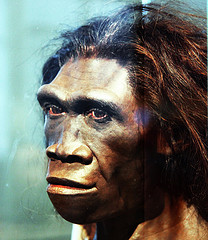
Many people have thought that pre-human hominids such as australopithecines may have eaten some meat. But new evidence suggests that early human ancestors may have been regular meat eaters, not just occasional carnivores.
In fact, the regular consumption of meat is now thought to have triggered the most major changes in our lineage, which is the genus Homo. Meat as a high-energy food may have allowed us to evolve much larger brains than ever before.
The Previous Evidence
The earliest solid evidence for pre-human meat eating dates back to 2.6 million years ago, in Gona in Ethiopia. There we have found small stone tools that were most likely used to butcher meat.
Some contentious evidence suggests that butchery may have existed much earlier, however, as far back as 3.4 million years ago. This current piece of evidence, though, suggests that we weren’t just performing occasional butchery 1.5 million years ago: it suggests that meat had become an important part of our diet.
The Child’s Skull
The child’s skull I’m referring to was found in the Olduvai Gorge of Tanzania. It belonged to one of our ancestors who was less than 2 years old.
The child was suffering from a form of malnutrition that we most commonly see in modern people who have meat-poor diets. The evidence suggests that if the child was suffering from similar symptoms to modern people who lack sufficient meat in their diet, then prehumans at the time must have been adapted to eating meat on a regular basis.

The Meat-Deficient Symptoms
This particular child suffered from bone lesions called porotic hyperostosis. Modern-day people who suffer from this condition usually lack vitamins B9 and B12. Most likely, researchers say, the child’s deficiency was either from a lack of meat, or if she was still weaning, a lack of meat in her mother’s diet.
Other Possibilities
It’s entirely possible that this child’s condition could have been caused by diseases, or some other cause besides malnourishment. Malaria and some parasites, for example, are known to cause similar deficiencies. “Basically, anything that correlates with low red-cell count,” according to John Hawks, from the University of Wisconsin.

We specialize in providing our over 1,000,000 customers with relevant product and condition information created by our professional editorial staff which includes our team of medical writers, medical practitioners, and health educators. eDrugStore.com Staff on Facebook