
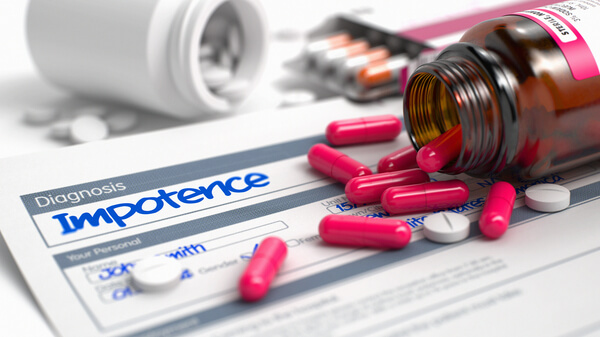

Despite the vast number of men affected by erectile dysfunction, certain myths about its causes and long-term effects persist. Here those myths are exploded and the truth behind them revealed.
It’s estimated that more than 30 million American men suffer from some degree of erectile dysfunction — an inability to get and keep an erection that is firm and long-lasting enough for intercourse.
For a disorder that is so widespread, a surprising number of myths about ED persist.
Hopefully, the information that follows can clear up at least a few of them for you.
Myth #1: ED is a normal part of the aging process and affects only older men.
Fact: While it is true that ED is more common among older men than among the young, it is definitely not an inevitable consequence of the aging process. Many older men enjoy fulfilling sex lives well into their golden years. And, although less common, a number of younger men suffer from ED as well.
The increased prevalence of ED among older men has more to do with the damage that can be caused over time by unhealthy lifestyle choices. And the longer a man has been alive, the more time he has had to make lifestyle decisions that can increase his risk of erection problems.
Men in their 50s, 60s, and beyond also are more likely to suffer from serious health problems, such as diabetes or heart disease, both of which can arise from some of the same unhealthy lifestyle choices directly involved in ED’s cause. And these health problems themselves have serious negative side effects on erectile function.
Perhaps the most insidious part of this myth is the suggestion that ED is a normal part of the aging process, which could discourage some older men from seeking professional help for the problem. As long as sexual desire continues, there is a good chance that erectile function can be restored, if only temporarily.
Myth #2: The primary cause of ED is psychological. In other words, it’s all in your head.
Fact: This myth about male impotence was shared by many medical professionals well into the second half of the 20th century. In fact, it’s now been established that about 80 percent of ED is caused by physiological factors, the single biggest one being an insufficient supply of blood to the penis. Medical professionals estimate that 10 to 20 percent of all ED is psychological in origin, caused by depression, inability to cope with stress, and anxiety, particularly anxiety about one’s sexual performance.

Of course, there’s no doubt that ED of physiological origin can then cause psychological consequences that can make it even more difficult to achieve and sustain an erection. But then that’s like the age-old conundrum of which came first — the chicken or the egg? And in such cases, it’s the blood flow that’s at the root of the problem.
Myth #3: Erectile dysfunction affects only men.
Fact: It’s certainly true that the physical inability to get an erection is strictly a male problem and for obvious reasons.
However, the impact of a man’s inability to function sexually is an obvious cause of distress for his partner and, left untreated, can lead to serious relationship problems.
A man who fears that he may be suffering from the early signs of ED should discuss this issue with his partner who might otherwise misconstrue his increasing inability to function sexually as a sign that she no longer arouses him.
Myth #4: Tight underwear can cause ED.
Fact: While wearing underwear that’s too tight can cause male fertility problems, there is no evidence that tighty whities will negatively affect erectile function, according to an article at HealthCentral.com. As to tight underwear’s effects on male fertility, that is related to the way tight underwear increases the temperature of the testicles, thus lowering both the quantity and quality of the sperm produced.
Myth #5: ED isn’t that serious a health problem.
Fact: In and of itself, a man’s inability to get and keep an erection is not a serious health problem, although it’s likely to have a serious effect on his love life and his significant other. However, the diminished blood flow to the penis that causes most ED is an early-warning sign that far more serious health problems may lie ahead, according to New York Daily News health columnist David Samadi, M.D.
Samadi, a urologist at Lenox Hill Hospital in New York City, writes: “Diabetes, hypertension, atherosclerosis, and even neurological disorders such as Parkinson’s disease are all possible health conditions resulting in ED.” For these reasons, it’s important for a man suffering from the early signs of ED to consult his doctor and undergo testing to determine the cause of his impotence. Such tests “could also discover a bigger health condition needing attention right away,” Samadi writes.
Myth #6: Men with ED have lost their sexual desire.
Fact: While it’s certainly true that men with low levels of sexual desire will find it difficult to get an erection, a low libido is not a major cause of ED. In fact, most men suffering from erection problems have a healthy sexual appetite but are unable to fully satisfy that appetite because they can’t get an erection suitable for intercourse. Testosterone, the primary male sex hormone, plays a big role in regulating sexual desire but has no direct impact on erectile function.
Myth #7: Having trouble getting an erection is a sure sign of ED.
Fact: Many a man has lost sleep because of his mistaken belief in this myth. Almost all men, regardless of age, have occasional problems getting an erection. Fatigue, a stressful day at work, or relationship problems can contribute to such erection problems. It is only when the difficulty getting and keeping an erection becomes a persistent pattern that it’s time to get some professional help.
Myth #8: Viagra and the drugs like it can fire up the libido in men who’ve lost their desire for sex.
Fact: Viagra, first introduced in 1998, was the first of a family of medications known as PDE5 inhibitors, so called because they temporarily sideline an enzyme known as phosphodiesterase-5, which can interfere with optimal blood flow. Other drugs in this family include Cialis, Levitra, Staxyn, and Stendra. They work by improving blood flow to the penis but have no effect on sexual desire.
Myth #9: The only treatment for ED is one of the PDE5 inhibitors like Viagra.
Fact: While clinical trials have shown that the PDE5 inhibitors effectively and safely treat vascular-related ED in most healthy men, they are not the only forms of treatment available. Even some men whose ED is caused by insufficient blood flow to the penis find that these pills don’t work for them. And men suffering from ED of psychological origin are unlikely to get much help from these drugs and should seek counseling to identify the mental or emotional issues causing erection problems.
_600x.jpg)
However, those suffering from ED of physiological origin who don’t respond to Viagra might first want to try one or more of the other PDE5 inhibitors to see if one does the trick.
Although these drugs work much the same way, they differ in chemical composition, and one may work better for some men than others.
If none of the PDE5 inhibitors seems to work, other treatments are available. These alternatives include penile injection therapy, penile implants, vacuum erection devices, and urethral suppositories. MayoClinic.org offers a more detailed overview of these alternative treatments.
If your doctor decides you’re an appropriate candidate for Viagra or one of the other PDE5 inhibitors and writes you a prescription, you can have it filled locally or use it to order the drug from a reliable online supplier like eDrugstore.com. If you decide to go the latter route, simply fax the prescription or scan and email it along with your order.
If you don’t yet have a prescription, eDrugstore can set up a complimentary online consultation with one of its team of licensed U.S. doctors. If it’s determined that you are an appropriate candidate for one of the ED drugs, a prescription will be authorized. To learn more about ED and the drugs available to treat it, click below to access eDrugstore’s Erection Dysfunction page.

We specialize in providing our over 1,000,000 customers with relevant product and condition information created by our professional editorial staff which includes our team of medical writers, medical practitioners, and health educators. eDrugStore.com Staff on Facebook